 ChipApex | Global Electronic Components Supplier
SEARCH
Search Product
Search Post
— IC芯片 | 连接器 | 传感器 | 被动器件 —
Search productSearch post
— IC芯片 | 连接器 | 传感器 | 被动器件 —
Consult the customer manager about the wholesale price.
consultation hotline:86-132-6715-2157
email:[email protected]
Contact the product manager for consultation. One-stop consultation is available.
Do you want a lower wholesale price? Please send us your inquiry and we will reply immediately.
The Z8S18020PSC is a microprocessor IC based on the Z180 core, featuring an 8-bit data bus and a maximum clock speed of 20 MHz. It is housed in a 64-pin DIP package with a pitch of 0.750 inches (19.05 mm). The device operates within a temperature range of 0°C to +70°C and supports I/O voltages of 3.3 V or 5.0 V depending on configuration. Key integrated peripherals include two asynchronous serial communication interfaces (ASCI), two 16-bit programmable reload timers, two chain-linked DMA channels, and an expanded MMU supporting up to 1 MB of address space.
Verify component authenticity through authorized distributors as this part may be subject to discontinuation notices. Confirm specific voltage requirements and pinout configurations against the official datasheet before integration. Ensure handling procedures account for moisture sensitivity levels if applicable. Review product change notifications for any manufacturing updates that might affect mechanical or electrical characteristics.
Select this component when system design requires Z80 instruction set compatibility alongside enhanced peripheral integration. Consider the 64-pin DIP package for through-hole mounting requirements. Evaluate power consumption needs against available low-power modes. Ensure external clock sources align with the supported frequency ranges and oscillator configurations specified in the technical documentation.
This microprocessor belongs to the Z8S180 series, which enhances the original Z80180 architecture. It combines a high-performance CPU core with extensive on-chip resources including memory management and serial communication interfaces. The series maintains object-code compatibility with the Z80 while offering improved performance and reduced EMI noise through advanced design features.
Public confirmed substitute part numbers are not provided in the source material. Verify cross-compatibility with other Z8S180 variants such as Z8S18010PSC or Z8L18020PSG by comparing pinouts, voltage levels, and functional specifications in their respective datasheets.
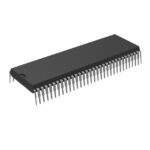 Z8S18020PSC
The activity of extra discounts on wholesale prices is in full swing…
Please fill in your contact information and we will send you the latest wholesale price list.






