 ChipApex | Global Electronic Components Supplier
SEARCH
Search Product
Search Post
— IC芯片 | 连接器 | 传感器 | 被动器件 —
Search productSearch post
— IC芯片 | 连接器 | 传感器 | 被动器件 —
Consult the customer manager about the wholesale price.
consultation hotline:86-132-6715-2157
email:[email protected]
Contact the product manager for consultation. One-stop consultation is available.
Do you want a lower wholesale price? Please send us your inquiry and we will reply immediately.
The ZAMP003H6TC is an ultra-low current low noise amplifier (LNA) MMIC designed for L-band and IF applications, primarily targeting DBS systems. It operates within a frequency range of 800MHz to 2.5GHz. The device provides a typical gain of 14dB to 14.8dB with a rising gain characteristic to counteract high-frequency losses. Key electrical parameters include a P1dB of -7.5dBm to -6.5dBm, a noise figure of 5.5dB, and a supply current of 6.8mA to 8mA at 4.5V to 5.5V. It is optimized for 50-ohm input and output impedances.
Verify component status as the ZAMP003H6TC is listed as obsolete in major distributor databases. Confirm availability through authorized channels or secondary markets if production integration is required. Ensure compliance with RoHS standards and lead-free specifications as documented in official datasheets. Validate package integrity for SC-70-6 surface mount configuration prior to assembly.
Select this component for designs requiring low noise amplification in the 800MHz to 2.5GHz range with strict current constraints. The rising gain profile makes it suitable for wideband applications where uniform response is needed across the spectrum. Consider the SC-70-6 package size for compact PCB layouts. Evaluate thermal performance and supply voltage stability within the 4.5V to 5.5V operating window.
The ZAMP003H6TC belongs to the ZAMP series of buffer and low noise amplifiers from Diodes Incorporated. This series complements other devices in the lineup to provide complete low-current, high-performance RF solutions. The part is specifically engineered to address the needs of satellite communication and consumer electronics markets requiring efficient signal conditioning in small form factors.
Public confirmed substitute part numbers are not available in the provided documentation. As the component is marked obsolete, engineers should consult manufacturer archives or authorized distributors for potential last-time buys or equivalent alternatives with compatible pinouts and electrical characteristics.
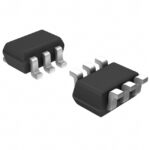 ZAMP003H6TC
The activity of extra discounts on wholesale prices is in full swing…
Please fill in your contact information and we will send you the latest wholesale price list.





