 ChipApex | Global Electronic Components Supplier
SEARCH
Search Product
Search Post
— IC芯片 | 连接器 | 传感器 | 被动器件 —
Search productSearch post
— IC芯片 | 连接器 | 传感器 | 被动器件 —
Consult the customer manager about the wholesale price.
consultation hotline:86-132-6715-2157
email:[email protected]
Contact the product manager for consultation. One-stop consultation is available.
Do you want a lower wholesale price? Please send us your inquiry and we will reply immediately.
The ZFBT-4R2G-FT+ is a coaxial bias tee manufactured by Mini-Circuits, designed for signal conditioning applications. It operates over a wide frequency range from 10 MHz to 4200 MHz (4.2 GHz). The component features SMA connectors and is housed in the Y460 case style. It provides low insertion loss and high isolation between the RF port and DC port, making it suitable for general-purpose use in RF systems requiring simultaneous power delivery and signal transmission.
Verify the specific suffix designation when ordering, as variations like FT+ indicate particular packaging or compliance attributes distinct from the base model. Confirm connector type and case style requirements against the official datasheet specifications to ensure mechanical fit. Check RoHS compliance status if environmental regulations apply to your assembly process. Ensure the operating frequency range of 10 MHz to 4.2 GHz aligns with your system design parameters before procurement.
Select this component when a wideband bias tee is required for frequencies up to 4.2 GHz. The SMA interface suits standard RF test fixtures and PCB layouts utilizing SMA footprints. Consider the Y460 case style for space-constrained applications where coaxial form factors are preferred over surface-mount alternatives. Evaluate insertion loss and isolation performance curves in the datasheet to ensure they meet specific signal integrity requirements for your application.
This part belongs to the ZFBT series of coaxial bias tees from Mini-Circuits, which are engineered for broad frequency coverage. The series typically offers robust performance in demanding RF environments. The ZFBT-4R2G variant specifically targets applications requiring operation beyond typical lower-frequency limits, extending up to 4.2 GHz while maintaining consistent electrical characteristics across the band.
Direct substitutes may include other Mini-Circuits models within the ZFBT family offering similar frequency ranges, such as those with different connector types or case styles. Verify that any replacement maintains the 10 MHz to 4.2 GHz operational bandwidth and compatible SMA interfaces. Cross-reference electrical specifications like insertion loss and isolation to ensure functional equivalence.
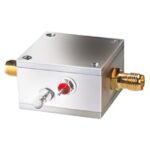 ZFBT-4R2G-FT+
The activity of extra discounts on wholesale prices is in full swing…
Please fill in your contact information and we will send you the latest wholesale price list.





