 ChipApex | Global Electronic Components Supplier
SEARCH
Search Product
Search Post
— IC芯片 | 连接器 | 传感器 | 被动器件 —
Search productSearch post
— IC芯片 | 连接器 | 传感器 | 被动器件 —
Consult the customer manager about the wholesale price.
consultation hotline:86-132-6715-2157
email:[email protected]
Contact the product manager for consultation. One-stop consultation is available.
Do you want a lower wholesale price? Please send us your inquiry and we will reply immediately.
The Mini-Circuits ZHL-1-2W+ is a broadband gain block amplifier designed for high-power applications within the 5 MHz to 500 MHz frequency range. It features a nominal gain of 29 dB and a noise figure of 7 dB, ensuring effective signal amplification across its operational bandwidth. The device operates on a 24 V supply with a current draw of 900 mA. Key performance metrics include a 1 dB compression point (P1dB) of 33 dBm and a third-order intercept point (OIP3) of 44 dBm, indicating strong linearity and power handling capabilities. The unit supports a maximum power dissipation of 2 W and functions reliably within a temperature range of -20°C to +65°C.
Verify that the specific part number matches the required frequency range and connector type. Confirm that the 24 V DC supply voltage aligns with existing system power rails. Ensure thermal management solutions accommodate the 2 W power dissipation rating. Check for RoHS compliance documentation if environmental regulations apply to the final assembly.
Select this component when a fixed gain of approximately 29 dB is required over a broad frequency span up to 500 MHz. Consider the 50 Ohm impedance match for compatibility with standard RF transmission lines. Evaluate the physical dimensions and BNC interface requirements against available board space or chassis mounting options before finalizing the design.
This model belongs to the ZHL series from Mini-Circuits, which specializes in high-power, linear amplifiers. The series typically offers 50 Ohm impedance and covers frequencies up to 4200 MHz depending on the specific variant. The ZHL-1-2W+ represents a mid-range option focused on lower frequency bands while maintaining significant output power capabilities suitable for demanding RF environments.
Consult official Mini-Circuits documentation for direct substitutes within the ZHL family. Verify that alternative models maintain compatible BNC interfaces and similar power dissipation ratings. Cross-reference electrical specifications to ensure equivalent gain and linearity performance.
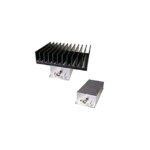 ZHL-1-2W+
The activity of extra discounts on wholesale prices is in full swing…
Please fill in your contact information and we will send you the latest wholesale price list.





