 ChipApex | Global Electronic Components Supplier
SEARCH
Search Product
Search Post
— IC芯片 | 连接器 | 传感器 | 被动器件 —
Search productSearch post
— IC芯片 | 连接器 | 传感器 | 被动器件 —
Consult the customer manager about the wholesale price.
consultation hotline:86-132-6715-2157
email:[email protected]
Contact the product manager for consultation. One-stop consultation is available.
Do you want a lower wholesale price? Please send us your inquiry and we will reply immediately.
The ZL30117GGG2 is a SONET/SDH OC-48/OC-192 line card synchronizer manufactured by Microchip Technology. It functions as a telecom IC designed to synchronize with standard system references and synthesize protected line interface clocks compliant with Telcordia GR-253-CORE and ITU-T G.813 standards. The device features an internal APLL for standard output clock generation. It operates within a supply voltage range of 2.97V to 3.63V and supports LVCMOS inputs with LVCMOS or LVPECL outputs. The component is housed in a 64-CABGA (9x9) package and is rated for operation between -40°C and +85°C.
Verify the specific ordering suffix against the manufacturer's current datasheet to confirm pinout, packaging, and electrical specifications match the design requirements. Ensure compatibility with existing PCB footprints for the 64-CABGA package. Confirm RoHS compliance status if required by regional regulations. Check for any recent Product Change Notifications (PCNs) that may affect material composition or assembly processes.
Select this component for applications requiring strict adherence to SONET/SDH timing standards. Verify that the input clock source matches the LVCMOS requirement. Ensure the load conditions on the LVCMOS or LVPECL outputs are within the specified limits. Consider the thermal dissipation characteristics of the CABGA package when designing the PCB layout for high-temperature environments up to 85°C.
The ZL30117GGG2 belongs to the ZL301xx family of SONET/SDH synchronizers from Microchip Technology (formerly Zarlink/Microsemi). This series includes variants such as the ZL30119 and ZL30120, which share similar functionalities but differ in package types and specific clock ratios. The 'GGG2' suffix typically denotes a lead-free, halogen-free version in a specific ball grid array package.
Potential substitutes include other members of the ZL301xx family, such as the ZL30119GGG2 or ZL30120GGG2, provided the pinout and electrical parameters are compatible. Verify functional equivalence regarding clock synthesis ratios and compliance standards before substitution.
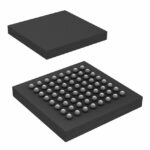 ZL30117GGG2
The activity of extra discounts on wholesale prices is in full swing…
Please fill in your contact information and we will send you the latest wholesale price list.






