 ChipApex | Global Electronic Components Supplier
SEARCH
Search Product
Search Post
— IC芯片 | 连接器 | 传感器 | 被动器件 —
Search productSearch post
— IC芯片 | 连接器 | 传感器 | 被动器件 —
Consult the customer manager about the wholesale price.
consultation hotline:86-132-6715-2157
email:[email protected]
Contact the product manager for consultation. One-stop consultation is available.
Do you want a lower wholesale price? Please send us your inquiry and we will reply immediately.
The ZL30142GGG2 is a Stratum network clock generator manufactured by Microchip Technology. It operates at a maximum frequency of 622.08 MHz with a single output channel. The device utilizes a Phase-Locked Loop (PLL) architecture and supports Ethernet, SONET/SDH, and Stratum synchronization standards. It features a 3:4 input-to-output ratio and provides differential outputs. The component is housed in a 64-CABGA package measuring 9x9 mm and is designed for surface mount installation. It functions within an industrial temperature range of -40°C to +85°C.
Verify the specific suffix 'GGG2' against official Microchip documentation to confirm pinout compatibility and electrical specifications relative to other variants in the ZL30142 family. Ensure that the 64-CABGA footprint matches the target PCB design constraints. Confirm RoHS compliance status through the manufacturer's current product change notifications or datasheet revision history before finalizing procurement.
Select this component when a single high-frequency output near 622 MHz is required for SONET/SDH or Ethernet synchronization. The choice depends on the availability of the 64-CABGA package and the need for differential output signaling. Verify that the input clock source aligns with the specified 3:4 multiplication ratio. Consider thermal management requirements given the operational temperature range limits.
The ZL30142 belongs to the ZL301xx series of network clock synthesizers from Microchip Technology. This series is widely used in telecommunications infrastructure for precise timing recovery and distribution. The GGG2 suffix typically denotes a specific package type and environmental compliance variant within the broader ZL30142 product line, distinguishing it from other packaging options like FBGA or QFN.
Direct replacements within the same family include the ZL30142GGG. Cross-family alternatives such as the ZL30145GGG2 offer similar DPLL functionality but may differ in package dimensions and pin configurations. Verify functional equivalence regarding output frequency and jitter performance before substitution.
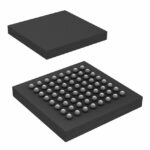 ZL30142GGG2
The activity of extra discounts on wholesale prices is in full swing…
Please fill in your contact information and we will send you the latest wholesale price list.





