 ChipApex | Global Electronic Components Supplier
SEARCH
Search Product
Search Post
— IC芯片 | 连接器 | 传感器 | 被动器件 —
Search productSearch post
— IC芯片 | 连接器 | 传感器 | 被动器件 —
Consult the customer manager about the wholesale price.
consultation hotline:86-132-6715-2157
email:[email protected]
Contact the product manager for consultation. One-stop consultation is available.
Do you want a lower wholesale price? Please send us your inquiry and we will reply immediately.
The ZL30160GGG2 is a four-channel universal clock translator manufactured by Microchip Technology. It features programmable synthesizers generating clocks from 1 kHz to 750 MHz, with two precision channels providing jitter below 0.7 ps RMS for 10 G PHYs. The device includes four reference inputs and eight LVPECL outputs plus four LVCMOS outputs. It supports flexible two-stage architecture for rate translation between data, line coding, and FEC rates. Key functions include automatic hitless reference switching, digital holdover, and configurable output drivers (LVCMOS, LVDS, HCSL). Configuration is managed via SPI/I2C or OTP memory.
Verify the ordering suffix GGG2 indicates a lead-free, tin/silver/copper finish in a 100-pin LBGA package rated for -40°C to +85°C operation. Confirm that the specific revision matches the March 2015 datasheet updates regarding frequency limits and register definitions. Ensure compatibility with the required host interface configuration via GPIO settings at power-up.
Select this component when designing systems requiring precise clock translation between arbitrary data rates, line coding rates, and FEC rates. The ZL30160 is suitable for applications demanding ultra-low jitter synthesis for 10 G PHYs. Consider the available output configurations (LVPECL, LVCMOS, LVDS, HCSL) and the need for hitless reference switching when evaluating this device against other clock generators.
The ZL30160 belongs to Microsemi's family of universal clock translators designed for high-performance telecom and networking infrastructure. It replaces older analog PLL solutions by offering digital flexibility and lower jitter performance. The GGG2 variant specifically denotes the commercial temperature range and lead-free packaging standard within the broader ZL30160 product line.
Publicly confirmed substitute part numbers are not provided in the source material. When replacing legacy components, verify that the new device supports the required input/output voltage levels and jitter specifications. Check for pin-to-pin compatibility if migrating from previous generation clock synthesizers.
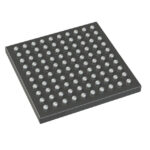 ZL30160GGG2
The activity of extra discounts on wholesale prices is in full swing…
Please fill in your contact information and we will send you the latest wholesale price list.





