 ChipApex | Global Electronic Components Supplier
SEARCH
Search Product
Search Post
— IC芯片 | 连接器 | 传感器 | 被动器件 —
Search productSearch post
— IC芯片 | 连接器 | 传感器 | 被动器件 —
Consult the customer manager about the wholesale price.
consultation hotline:86-132-6715-2157
email:[email protected]
Contact the product manager for consultation. One-stop consultation is available.
Do you want a lower wholesale price? Please send us your inquiry and we will reply immediately.
The ZL30407QCG1 is a Network Element Phase-Locked Loop (PLL) manufactured by Microchip Technology, originally designed by Zarlink Semiconductor. It operates on a single 3.3 V power supply with a 5 V tolerant microprocessor interface. The device synchronizes SDH and SONET systems while generating multiple clocks for legacy PDH equipment and ST-BUS/GCI backplanes. It supports input reference frequencies of 8 kHz, 1.544 MHz, 2.048 MHz, and 19.44 MHz. Key electrical parameters include a maximum output frequency of 155.52 MHz and an operating temperature range of -40°C to +85°C. The component is housed in an 80-pin LQFP package.
The ZL30407QCG1 variant includes bake and drypack packaging with Pb-free matte tin leads. Verify the part status as discontinued before procurement planning. Ensure compatibility with existing 80-pin LQFP footprints and 3.3 V logic levels. Confirm that the specific ordering suffix QCG1 aligns with environmental and handling requirements for the target assembly process.
Select the ZL30407QCG1 for designs requiring Stratum 3 synchronization and multi-rate clock generation from a single PLL. It is pin-compatible with ZL30410, ZL30402, and MT90401, facilitating direct upgrades or replacements in existing hardware. Ensure the design accommodates the required 20 MHz Master Clock Oscillator input for holdover stability and utilizes either hardware or software control interfaces based on system architecture.
This component belongs to the ZL30407 family of Network Element PLLs. The 'Q' indicates the commercial temperature grade (-40°C to +85°C), 'C' denotes the 80-pin LQFP package, 'G1' specifies the lead-free matte tin finish with bake and drypack handling. The device was originally developed by Zarlink Semiconductor before being acquired by Microchip Technology.
The datasheet explicitly states the ZL30407 is pin-compatible with the ZL30410, ZL30402, and MT90401. These parts may serve as functional substitutes if available, provided their specific feature sets meet the application requirements. No other cross-model substitutes are documented in the provided source material.
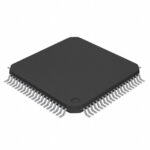 ZL30407QCG1
The activity of extra discounts on wholesale prices is in full swing…
Please fill in your contact information and we will send you the latest wholesale price list.







