 ChipApex | Global Electronic Components Supplier
SEARCH
Search Product
Search Post
— IC芯片 | 连接器 | 传感器 | 被动器件 —
Search productSearch post
— IC芯片 | 连接器 | 传感器 | 被动器件 —
Consult the customer manager about the wholesale price.
consultation hotline:86-132-6715-2157
email:[email protected]
Contact the product manager for consultation. One-stop consultation is available.
Do you want a lower wholesale price? Please send us your inquiry and we will reply immediately.
The ZL30416GGG2 is a high-performance, low-jitter clock generator and jitter attenuator manufactured by Microchip Technology. It features four independent output channels capable of generating frequencies up to 500 MHz. The device integrates a voltage-controlled crystal oscillator (VCXO) and supports multiple input reference sources, including single-ended and differential configurations. It utilizes a fractional-N phase-locked loop architecture to provide precise frequency synthesis with ultra-low phase noise characteristics. The component operates within a specified temperature range and requires a single power supply voltage for functionality.
Verify the specific suffix codes on the component marking against official Microchip documentation to confirm package type, temperature grade, and lead-free status. Ensure compatibility with existing PCB footprint dimensions and thermal requirements. Confirm that the required input reference frequencies fall within the supported operational range of the device's synthesizer. Validate power supply specifications match the datasheet recommendations for optimal jitter performance.
Select this component when designing systems that require multi-channel clock generation with stringent jitter specifications. Consider the available output frequencies and the need for VCXO control for frequency modulation applications. Evaluate the input reference availability to ensure it matches the device's supported modes. Assess the power consumption and thermal dissipation capabilities of the target enclosure relative to the device's operating conditions.
This part belongs to the ZL30000 series of clock generators and jitter attenuators from Microchip. These devices are designed to replace discrete clock solutions in complex electronic systems. The series offers integration of multiple functions into a single package, reducing board space and improving signal integrity compared to traditional discrete oscillator and buffer combinations.
Consult Microchip's official cross-reference tools or product selection guides for verified equivalent parts. Verify pin-to-pin compatibility and register-level software compatibility if migrating from previous generations. Ensure that any substitute component meets the same electrical specifications for jitter, frequency range, and power supply requirements.
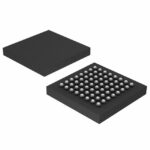 ZL30416GGG2
The activity of extra discounts on wholesale prices is in full swing…
Please fill in your contact information and we will send you the latest wholesale price list.






