 ChipApex | Global Electronic Components Supplier
SEARCH
Search Product
Search Post
— IC芯片 | 连接器 | 传感器 | 被动器件 —
Search productSearch post
— IC芯片 | 连接器 | 传感器 | 被动器件 —
Consult the customer manager about the wholesale price.
consultation hotline:86-132-6715-2157
email:[email protected]
Contact the product manager for consultation. One-stop consultation is available.
Do you want a lower wholesale price? Please send us your inquiry and we will reply immediately.
The ZL30683LFG7 is a three-channel, ten-input, eighteen-output line card timing IC manufactured by Microchip Technology. It integrates three Digital Phase-Locked Loops (DPLLs) and five output frequency families to support carrier-grade synchronization protocols including SyncE, SONET/SDH, OTN, and IEEE 1588. The device accepts input frequencies from 1kHz to 900MHz and generates output clocks ranging from less than 1Hz to 1045MHz. Key electrical specifications include an output jitter of less than 0.3ps RMS for integer dividers and typically under 1ps RMS for fractional dividers. It operates within a temperature range of -40°C to +85°C and utilizes an 80-lead LGA package.
Verify the specific ordering suffix 'LFG7' corresponds to the 80-lead LGA package with NiAu finish and tray packaging as documented in the product brief. Confirm that the required channel count matches the ZL30683 variant, which provides three DPLL channels compared to the single or dual-channel options available in the ZL30681 and ZL30682 series.
Select the ZL30683 when three independent DPLL channels are required for complex timing architectures. Ensure the application requires up to ten inputs and eighteen outputs. Verify that the input frequencies do not exceed 900MHz and that the output requirements align with the 1045MHz maximum frequency limit. Consider the internal Flash memory configuration needs for automatic self-configuration at power-up.
The ZL30683LFG7 belongs to the ZL3068x family of line card timing ICs, which also includes the ZL30681 (1-channel) and ZL30682 (2-channel). All variants share the same 80-lead LGA package and core features but differ in the number of integrated DPLL channels. This family is designed for carrier-grade synchronization in telecommunications equipment.
Public confirmed substitute part numbers are not provided in the source material. Designers should evaluate other members of the ZL3068x family (ZL30681, ZL30682) if fewer channels are sufficient, ensuring pin compatibility and feature parity.
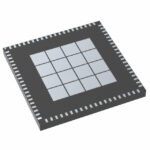 ZL30683LFG7
The activity of extra discounts on wholesale prices is in full swing…
Please fill in your contact information and we will send you the latest wholesale price list.






