 ChipApex | Global Electronic Components Supplier
SEARCH
Search Product
Search Post
— IC芯片 | 连接器 | 传感器 | 被动器件 —
Search productSearch post
— IC芯片 | 连接器 | 传感器 | 被动器件 —
Consult the customer manager about the wholesale price.
consultation hotline:86-132-6715-2157
email:[email protected]
Contact the product manager for consultation. One-stop consultation is available.
Do you want a lower wholesale price? Please send us your inquiry and we will reply immediately.
The ZL30691LFG7 is a single-channel system synchronizer from Microchip Technology, housed in an 80-lead LGA package measuring 11 x 11 mm. It supports up to 10 differential or CMOS inputs with frequencies ranging from 0.5Hz to 900MHz and generates up to 18 outputs spanning <0.5Hz to 1045MHz. The device features one DPLL channel, two low-jitter synthesizers (Synth1, Synth2), and one general-purpose synthesizer (Synth0). Key electrical parameters include output jitter of less than 0.3ps RMS for integer dividers and typically under 1ps RMS for fractional dividers. It operates within a temperature range of -40°C to +85°C.
Verify the specific ordering suffix 'LFG7' corresponds to the 80-lead LGA tray packaging configuration. Confirm that the component meets RoHS compliance standards as indicated by the NiAu (Pb-free) finish. Ensure the application environment remains within the specified operating temperature range of -40°C to +85°C. Cross-reference the datasheet version August 2019 for accurate pinout and electrical specifications before finalizing procurement.
Select the ZL30691LFG7 when only one DPLL channel is required for system synchronization. This model provides ten inputs and eighteen outputs, suitable for complex timing architectures needing multiple clock domains. Compare against ZL30692 and ZL30693 if additional DPLL channels are necessary for redundant reference paths. Evaluate the need for low-jitter synthesis versus general-purpose outputs to ensure the five available frequency families meet the design requirements.
The ZL30691LFG7 belongs to the ZL3069x family of system synchronizers, which also includes the ZL30692 (two-channel) and ZL30693 (three-channel) variants. All models share the same 80-lead LGA package and core functionality but differ in the number of integrated DPLL channels. This family is designed for high-performance timing applications requiring precise frequency conversion and phase alignment across various telecom and datacom standards.
Publicly confirmed substitute part numbers are not available in the provided documentation. Designers should consult Microchip Technology directly for current alternative recommendations or updated product briefs that may list compatible replacements.
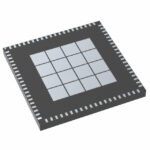 ZL30691LFG7
The activity of extra discounts on wholesale prices is in full swing…
Please fill in your contact information and we will send you the latest wholesale price list.





