 ChipApex | Global Electronic Components Supplier
SEARCH
Search Product
Search Post
— IC芯片 | 连接器 | 传感器 | 被动器件 —
Search productSearch post
— IC芯片 | 连接器 | 传感器 | 被动器件 —
Consult the customer manager about the wholesale price.
consultation hotline:86-132-6715-2157
email:[email protected]
Contact the product manager for consultation. One-stop consultation is available.
Do you want a lower wholesale price? Please send us your inquiry and we will reply immediately.
The ZL30732ALDG1 is a network synchronizer from the Microchip ZL3073x family, designed for PTP and SyncE applications. It features up to five independent clock channels with any-to-any frequency conversion capabilities. The device accepts up to ten differential or single-ended inputs ranging from 0.5 Hz to 1250 MHz and provides up to ten differential or twenty CMOS outputs spanning 0.5 Hz to 750 MHz. Typical output jitter is 100 fsRMS at 156.25 MHz (12 kHz to 20 MHz bandwidth). Core power consumption is less than 0.9 W. It integrates up to eight DPLLs, supports MiToDSync interfaces, and operates on 1.8 V and 3.3 V supplies within a 64-lead VQFN package.
Verify the specific suffix 'A' against the official datasheet to confirm configuration differences such as pinout variations or internal memory settings. Ensure the ordering part number matches the required channel count and output types defined in the product brief. Confirm compliance with relevant ITU-T and IEEE standards for the target synchronization application.
Select this model based on the requirement for up to five clock channels and support for both physical-layer and packet-network synchronization. Verify that the input frequency range up to 1250 MHz and output range up to 750 MHz meet system specifications. Consider the low jitter performance and power consumption if designing for carrier-grade or wireless infrastructure environments.
This component belongs to the ZL30731-ZL30735 family of PTP and SyncE network synchronizers. These devices are engineered for high-performance timing in telecommunications and datacom applications. The family shares common architectural features like multiple DPLLs and synthesizers, differentiated by the number of available channels and I/O configurations.
Other members of the ZL3073x family (ZL30731, ZL30733, ZL30734, ZL30735) share the same package and general functionality but differ in channel counts and I/O availability. Verify pin compatibility and feature requirements before substituting.
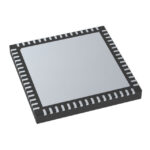 ZL30732ALDG1
The activity of extra discounts on wholesale prices is in full swing…
Please fill in your contact information and we will send you the latest wholesale price list.





