 ChipApex | Global Electronic Components Supplier
SEARCH
Search Product
Search Post
— IC芯片 | 连接器 | 传感器 | 被动器件 —
Search productSearch post
— IC芯片 | 连接器 | 传感器 | 被动器件 —
Consult the customer manager about the wholesale price.
consultation hotline:86-132-6715-2157
email:[email protected]
Contact the product manager for consultation. One-stop consultation is available.
Do you want a lower wholesale price? Please send us your inquiry and we will reply immediately.
The ZL30732LDG1 is a network synchronizer from Microchip Technology, designed for high-precision timing applications. It features 20 outputs with a maximum output frequency of 750 MHz and supports differential and CMOS output levels. The device accepts differential or single-ended inputs up to 1.25 GHz. Operating on a 1.8 V to 3.3 V supply, it functions within a temperature range of -40°C to +85°C. Housed in a VQFN-64 package, this component serves as an enhanced 1588 timing card solution.
Verify the specific suffix 'LDG1' against the official datasheet to confirm pinout and electrical characteristics match the design requirements. Check for recent Product Change Notifications (PCNs) regarding packaging or assembly updates. Ensure compatibility with the required IEEE 1588 software modules if precise time transfer is needed. Confirm moisture sensitivity handling procedures due to the VQFN package type.
Select this component when designing systems that require strict adherence to ITU-T G.8273.2 Class C or D time error specifications. It is suitable for replacing older generations like the ZL30702 series where higher channel count and lower jitter are necessary. Consider the 20-output capacity and 750 MHz max frequency to ensure sufficient fan-out for the target application architecture without additional buffering.
The ZL30732LDG1 belongs to the ZL3073x/63x/64x network synchronizer platform introduced by Microchip. This family addresses the stringent timing requirements of 5G wireless access networks. It integrates advanced measurement, calibration, and adjustment functions to reduce time errors significantly compared to previous solutions, enabling dense channel configurations in compact form factors.
The ZL30702LDG6 is listed as obsolete with the ZL30732LDG1 identified as the manufacturer-recommended replacement. Verify mechanical fitment between the 100-aQFN package of the legacy part and the VQFN-64 package of the new part. Electrical parameter differences, particularly output count and jitter performance, should be reviewed to ensure system compatibility.
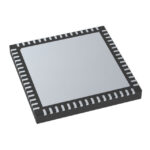 ZL30732LDG1
The activity of extra discounts on wholesale prices is in full swing…
Please fill in your contact information and we will send you the latest wholesale price list.







