 ChipApex | Global Electronic Components Supplier
SEARCH
Search Product
Search Post
— IC芯片 | 连接器 | 传感器 | 被动器件 —
Search productSearch post
— IC芯片 | 连接器 | 传感器 | 被动器件 —
Consult the customer manager about the wholesale price.
consultation hotline:86-132-6715-2157
email:[email protected]
Contact the product manager for consultation. One-stop consultation is available.
Do you want a lower wholesale price? Please send us your inquiry and we will reply immediately.
The ZL40212LDF1 is a clock buffer and driver manufactured by Microchip Technology, designed for high-speed signal distribution. It features one circuit configured as a fanout buffer with two outputs. The device supports multiple input types including CML, HCSL, LVCMOS, LVDS, and LVPECL. It operates within a supply voltage range of 3.135 V to 3.465 V and functions across an industrial temperature range of -40°C to +85°C. The component is housed in a 16-VFQFN exposed pad package (QFN-16) and utilizes tape and reel packaging.
Verify the specific suffix LDF1 corresponds to the required tape and reel packaging configuration and lead count. Confirm that the QFN-16 package dimensions align with your PCB footprint requirements. Ensure the operating temperature range meets your environmental specifications. Check RoHS compliance status if restricted substances are a concern. Validate the moisture sensitivity level for proper handling during assembly.
Select this component when a single-ended or differential input must be split into two matched output paths. Consider the supported input logic levels to ensure compatibility with your source clock generator. Evaluate the power supply voltage constraints against your system rails. Assess the thermal performance within the specified ambient temperature limits. Compare the propagation delay characteristics against your timing budget requirements.
This part belongs to the ZL402x series of clock fanout buffers from Microchip Technology. These devices are engineered to provide low jitter and precise skew performance for critical timing applications. The series includes various configurations to support different output counts and signaling standards, forming a scalable solution for complex clock tree architectures in modern electronic systems.
Consult official substitution guides for compatible alternatives within the ZL402x family. Verify pin-to-pin compatibility and electrical parameter equivalence before replacing. Ensure the substitute part supports the same input/output signaling standards. Confirm package dimensions match the existing board layout. Review any changes in manufacturing origin or quality certifications.
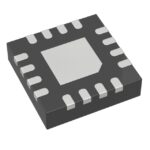 ZL40212LDF1
The activity of extra discounts on wholesale prices is in full swing…
Please fill in your contact information and we will send you the latest wholesale price list.





