 ChipApex | Global Electronic Components Supplier
SEARCH
Search Product
Search Post
— IC芯片 | 连接器 | 传感器 | 被动器件 —
Search productSearch post
— IC芯片 | 连接器 | 传感器 | 被动器件 —
Consult the customer manager about the wholesale price.
consultation hotline:86-132-6715-2157
email:[email protected]
Contact the product manager for consultation. One-stop consultation is available.
Do you want a lower wholesale price? Please send us your inquiry and we will reply immediately.
The ZL40262LDG1 is a two-output ultra-low additive phase noise fanout buffer designed for PCIe Gen 1 to 5 and UPI/QPI applications. It accepts any differential input format and provides two differential HCSL outputs. The device supports clock frequencies from 0 to 400 MHz and operates on 2.5V or 3.3V power supplies. Key electrical parameters include an ultra-low additive jitter of 32 fs (12kHz to 20MHz band at 400MHz), a maximum output-to-output skew of 50 ps, and an input-to-output delay of 1 ns. It features an embedded LDO for superior power supply noise rejection and individual output enable pins.
Verify the ordering suffix against the datasheet: 'LDG1' indicates a 20-pin QFN package supplied in trays, while 'LDF1' denotes tape and reel packaging. Confirm that the required operating temperature range (-40°C to +85°C) aligns with system specifications. Ensure power supply decoupling capacitors are placed close to VDD and VDDO pins as recommended for optimal performance.
Select this component when distributing low-jitter HCSL clocks to multiple destinations requiring PCIe Gen 1 through 5 compliance. It is suitable for systems needing logic translation between different clock domains or signal restoration. Verify that the input source can drive the specified differential or single-ended input requirements within the 0 to 400 MHz range.
The ZL40262LDG1 belongs to the ZL40262 family of ultra-low additive jitter fanout buffers manufactured by Microchip Technology (formerly Microsemi). It is specifically engineered for high-speed serial interface clock distribution, offering transparent buffering without adding significant jitter to the source clock signal.
Public confirmed substitute part numbers are not available in the provided documentation. Consult official Microchip resources for cross-reference information if alternative sourcing is required.
Unused outputs should be left unconnected.
The maximum output-to-output skew is 50 ps.
Yes, the device transfers spread-spectrum signals without attenuation.
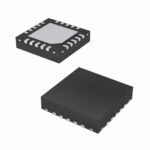 ZL40262LDG1
The activity of extra discounts on wholesale prices is in full swing…
Please fill in your contact information and we will send you the latest wholesale price list.





