 ChipApex | Global Electronic Components Supplier
SEARCH
Search Product
Search Post
— IC芯片 | 连接器 | 传感器 | 被动器件 —
Search productSearch post
— IC芯片 | 连接器 | 传感器 | 被动器件 —
Consult the customer manager about the wholesale price.
consultation hotline:86-132-6715-2157
email:[email protected]
Contact the product manager for consultation. One-stop consultation is available.
Do you want a lower wholesale price? Please send us your inquiry and we will reply immediately.
The ZL8101ALAF is a digital PWM controller from the Digital-DC series, designed for synchronous buck converter applications. It operates with an input voltage range of 4.5V to 14V and supports switching frequencies between 200kHz and 1.4MHz. The device features a 32-QFN (5x5) package with a bare pad, suitable for surface mount installation. It provides one positive output configured as a transistor driver. Key control characteristics include enable, power good, soft start, and tracking functions. The component utilizes I2C, PMBus, and SMBus serial interfaces for configuration and communication.
Verify component status carefully as this part may be obsolete. Confirm compatibility with host controllers using PMBus protocol. Ensure evaluation tools like PowerNavigator software are available for configuration. Check moisture sensitivity level requirements during handling. Validate that external components such as ZL1505 or ISL6611 match system design needs.
Select this controller when designing flexible DC power blocks requiring adaptive efficiency optimization. Consider its compatibility with DrMOS devices or phase doublers for specific topology needs. Evaluate the need for parallel operation if high current sourcing is required. Assess interface requirements for SMBus or PMBus integration with existing host systems.
The ZL8101 belongs to Renesas' Digital-DC family, combining mixed-signal power conversion and management. It eliminates complex power supply managers by integrating key thermal and power functions. The technology blends power conversion performance with management features, serving as a versatile building block for various DC power designs.
Public confirmed substitute part numbers are not provided in the source material. Verify availability of alternative models within the Digital-DC series or consult manufacturer documentation for direct replacements.
It is designed to work with the ZL1505 MOSFET driver IC, ISL6611 Phase Doubler IC, or DrMOS type devices.
Most operating features can be configured by simple pin-strap/resistor selection or through the SMBus serial interface.
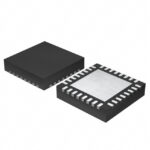 ZL8101ALAF
The activity of extra discounts on wholesale prices is in full swing…
Please fill in your contact information and we will send you the latest wholesale price list.





