 ChipApex | Global Electronic Components Supplier
SEARCH
Search Product
Search Post
— IC芯片 | 连接器 | 传感器 | 被动器件 —
Search productSearch post
— IC芯片 | 连接器 | 传感器 | 被动器件 —
Consult the customer manager about the wholesale price.
consultation hotline:86-132-6715-2157
email:[email protected]
Contact the product manager for consultation. One-stop consultation is available.
Do you want a lower wholesale price? Please send us your inquiry and we will reply immediately.
The ZNBG3211Q20TC is a specialized bias controller IC from Diodes Incorporated, designed for tone control applications. It provides a single-chip solution integrating MOSFET biasing with polarization switching and tone detection capabilities. The device supports high-side and low-side configurations, operating within a supply voltage range of 5V to 10V and consuming 25mA of supply current. It functions reliably across an industrial temperature range of -40°C to 70°C. Packaged in a 20-QSOP surface-mount format, this component facilitates efficient power management in audio signal processing circuits requiring precise bias control.
This component is officially marked as obsolete by the manufacturer. Verification of end-of-life status is required before integration into new designs. Existing inventory may be limited or unavailable through standard distribution channels. Engineers should confirm final lifecycle status directly with Diodes Incorporated or authorized distributors to ensure compliance with long-term supply chain requirements and avoid unexpected discontinuation impacts on production schedules.
Select this component only for legacy system maintenance or specific tone control architectures requiring integrated bias and detection. Verify compatibility with existing 5V-10V supply rails and 20-QSOP footprint constraints. Consider thermal performance within the specified -40°C to 70°C range. Due to its obsolete status, evaluate alternative solutions for new product development to ensure long-term availability and support continuity.
The ZNBG3211 series belongs to Diodes Incorporated's specialized PMIC portfolio focused on bias control. This specific model combines power switching and signal detection functions. It targets niche audio and communication applications requiring precise bias management. The QSOP package offers space-efficient mounting for dense circuit boards. Understanding its role within the broader bias controller family aids in assessing functional relevance for specific engineering requirements.
No public confirmed substitute part numbers are available for this obsolete component. Engineers must design around existing stock or develop custom alternatives. Cross-referencing functional equivalents requires detailed electrical parameter matching. Consult manufacturer documentation for potential internal replacements or updated series recommendations.
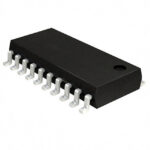 ZNBG3211Q20TC
The activity of extra discounts on wholesale prices is in full swing…
Please fill in your contact information and we will send you the latest wholesale price list.





