ChipApex | Global Electronic Components Supplier
SEARCH
Search Product
Search Post
— IC芯片 | 连接器 | 传感器 | 被动器件 —
Search productSearch post
— IC芯片 | 连接器 | 传感器 | 被动器件 —
Consult the customer manager about the wholesale price.
consultation hotline:86-132-6715-2157
email:[email protected]
Contact the product manager for consultation. One-stop consultation is available.
Do you want a lower wholesale price? Please send us your inquiry and we will reply immediately.
The ZVBP-323-S+ is a coaxial cavity band pass filter manufactured by Mini-Circuits, designed for RF signal conditioning applications. It operates within a frequency range of 300 to 346 MHz with a center frequency of 323 MHz and a bandwidth of 46 MHz. The component features a 50 Ohm impedance and utilizes SMA connectors for inline module integration. Typical performance specifications include an insertion loss of 0.2 dB, a return loss of 22 dB, and rejection capabilities reaching 80 dB.
Verify the specific datasheet version and mechanical dimensions against your PCB layout requirements before procurement. Confirm that the SMA connector polarity and mating interface match your system cabling. Ensure environmental operating conditions align with the component's specified temperature range. Cross-reference the part number suffix to confirm the exact termination style and packaging configuration required for your assembly process.
Select this component when high selectivity and low loss are critical within the 300-346 MHz range. The coaxial cavity construction offers superior stability compared to planar filters. Consider the physical size constraints as cavity filters typically require more board space than surface-mount alternatives. Evaluate the need for high rejection levels to mitigate adjacent channel interference in dense spectral environments.
This model belongs to Mini-Circuits' ZVBP series of cavity band pass filters. These components are engineered for robust performance in demanding RF environments. The series provides various center frequencies while maintaining consistent electrical characteristics such as low insertion loss and high power handling capabilities suitable for commercial and industrial applications.
Direct substitutes may include other Mini-Circuits cavity filters with similar center frequencies and bandwidths, such as the ZVBP-3260-S+ for higher frequency ranges or models from the same family with adjusted passbands. Verify mechanical compatibility and connector types when considering alternative manufacturers.
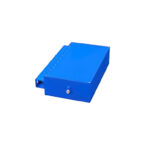 ZVBP-323-S+
The activity of extra discounts on wholesale prices is in full swing…
Please fill in your contact information and we will send you the latest wholesale price list.