ChipApex | Global Electronic Components Supplier
SEARCH
Search Product
Search Post
— IC芯片 | 连接器 | 传感器 | 被动器件 —
Search productSearch post
— IC芯片 | 连接器 | 传感器 | 被动器件 —
Consult the customer manager about the wholesale price.
consultation hotline:86-132-6715-2157
email:[email protected]
Contact the product manager for consultation. One-stop consultation is available.
Do you want a lower wholesale price? Please send us your inquiry and we will reply immediately.
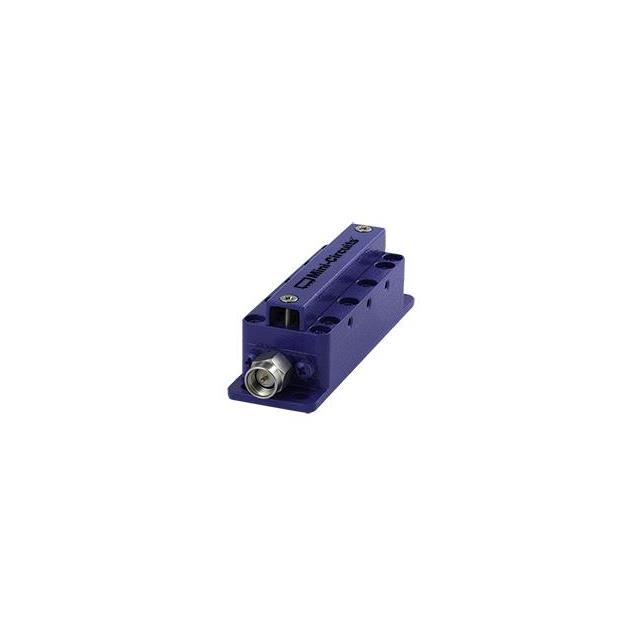
The ZVBP-8250-S+ is a cavity band pass filter manufactured by Mini-Circuits. It operates within a frequency range of 8025 MHz to 8475 MHz, providing a bandwidth of 450 MHz. The component features a nominal impedance of 50 Ohms and utilizes SMA connectors for interface connectivity. Designed for signal conditioning applications, this filter exhibits very low insertion loss and excellent power handling capabilities. It offers fast roll-off characteristics with wide stopband rejection, ensuring effective signal isolation in RF systems.
Verify the specific datasheet version when sourcing the ZVBP-8250-S+ to ensure compliance with current RoHS and REACH standards. Confirm that the SMA connector polarity matches your system requirements. Check for any updated mechanical drawings if precise mounting dimensions are critical for your enclosure design. Ensure proper ESD precautions are taken during handling and installation to maintain component integrity.
Select the ZVBP-8250-S+ when a fixed center frequency around 8.25 GHz is required with a 450 MHz bandwidth. This component is suitable for designs needing high power handling and steep skirt selectivity. Consider the SMA interface compatibility with existing PCB or cable assemblies. Evaluate if the cavity size fits within the available space constraints of the final assembly compared to planar alternatives.
This part belongs to Mini-Circuits' ZVBP series of cavity band pass filters. These components are engineered for demanding RF and microwave environments where stability and performance are paramount. The series typically covers various frequency bands up to 36 GHz, offering consistent electrical characteristics across different models. The ZVBP-8250-S+ specifically targets S-band and upper C-band applications requiring robust signal filtering.
Consult Mini-Circuits documentation for direct cross-references. Verify that any substitute maintains the 8025-8475 MHz passband and 50 Ohm impedance. Ensure connector type remains SMA to avoid adapter losses.
 ZVBP-8250-S+
The activity of extra discounts on wholesale prices is in full swing…
Please fill in your contact information and we will send you the latest wholesale price list.