 ChipApex | Global Electronic Components Supplier
SEARCH
Search Product
Search Post
— IC芯片 | 连接器 | 传感器 | 被动器件 —
Search productSearch post
— IC芯片 | 连接器 | 传感器 | 被动器件 —
Consult the customer manager about the wholesale price.
consultation hotline:86-132-6715-2157
email:[email protected]
Contact the product manager for consultation. One-stop consultation is available.
Do you want a lower wholesale price? Please send us your inquiry and we will reply immediately.
The ZXCT1085E5TA is a high-side current monitor manufactured by Diodes Incorporated, designed for precise current sensing in power management applications. It operates within an input voltage range of 2.7V to 40V and functions reliably across an extended temperature range of -40°C to +125°C. The device features a low operating supply current of 600nA, ensuring minimal impact on system efficiency. Packaged in a compact SOT-25 (SC-74A) surface-mount case, it integrates internal circuitry for accurate monitoring without requiring external shunt resistors for basic operation.
Verify the specific suffix E5TA corresponds to the SOT-25 package configuration required for your design. Confirm that the 40V maximum input rating aligns with your system's peak voltage conditions. Ensure compatibility with the -40°C to +125°C operating temperature range specified for automotive or industrial environments. Check for any recent Product Change Notifications regarding leadframe materials or bond wire composition updates.
Select this component when high-side monitoring is required within a 40V limit. The 600nA quiescent current makes it suitable for battery-powered devices where standby consumption is critical. The SOT-25 package offers a small footprint for space-constrained PCB layouts. Consider the ±3% accuracy typical for this series if tighter tolerances are needed, alternative variants like the ZXCT1082 may offer different precision levels.
This part belongs to the ZXCT108x series of current monitors from Diodes Incorporated. The series includes variants with different input voltage ranges and accuracies, such as the ZXCT1082 and ZXCT1083. These devices share similar functional architectures but differ in electrical specifications to suit various application requirements.
Direct substitutes include other ZXCT108x series parts like ZXCT1082E5TA or ZXCT1083E5TA, provided their input voltage and accuracy specifications meet the design requirements. Verify pinout compatibility and thermal performance before substitution.
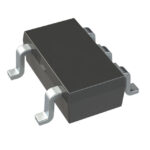 ZXCT1085E5TA
The activity of extra discounts on wholesale prices is in full swing…
Please fill in your contact information and we will send you the latest wholesale price list.





