 ChipApex | Global Electronic Components Supplier
SEARCH
Search Product
Search Post
— IC芯片 | 连接器 | 传感器 | 被动器件 —
Search productSearch post
— IC芯片 | 连接器 | 传感器 | 被动器件 —
Consult the customer manager about the wholesale price.
consultation hotline:86-132-6715-2157
email:[email protected]
Contact the product manager for consultation. One-stop consultation is available.
Do you want a lower wholesale price? Please send us your inquiry and we will reply immediately.
The ZXCT199B1DW-7 is a current monitor and power regulator manufactured by Diodes Incorporated. It operates within an input voltage range of 2.7 V to 26 V and features a maximum supply current of 100 uA. The device provides high accuracy with a specified tolerance of 0.8%. It supports both high-side and low-side sensing configurations and delivers a common-mode voltage output. The component is housed in a compact SOT-363-7 package, suitable for surface-mount installation, and functions reliably across an extended temperature range from -40 C to +125 C.
Verify the specific suffix DW-7 indicates the standard tape and reel packaging configuration when sourcing components. Confirm that the B1 designation corresponds to the required 0.8% accuracy grade for your design specifications. Ensure compatibility with the SOT-363-7 footprint during PCB layout finalization. Cross-reference the manufacturer's latest datasheet to validate any updates to electrical characteristics or recommended operating conditions prior to procurement.
Select this component when designing circuits that demand high precision current monitoring within a constrained space. The low supply current makes it suitable for battery-powered applications where energy efficiency is critical. The wide input voltage range allows flexibility in system architecture design. Consider the thermal performance and package limitations when determining placement on the printed circuit board relative to other heat-generating components.
This part belongs to the ZXCT199 series of current monitors produced by Diodes Incorporated. The series focuses on providing accurate current sensing solutions for various power management applications. The specific model utilizes a small outline transistor package variant designed for automated surface-mount assembly processes. It serves as a key component in modern electronic systems requiring reliable power regulation and monitoring capabilities.
The INA199B1QDCKRQ1 from Texas Instruments is identified as a potential substitute option. Verify pinout compatibility and electrical parameter alignment before implementing any replacement strategy.
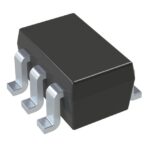 ZXCT199B1DW-7
The activity of extra discounts on wholesale prices is in full swing…
Please fill in your contact information and we will send you the latest wholesale price list.





