 ChipApex | Global Electronic Components Supplier
SEARCH
Search Product
Search Post
— IC芯片 | 连接器 | 传感器 | 被动器件 —
Search productSearch post
— IC芯片 | 连接器 | 传感器 | 被动器件 —
Consult the customer manager about the wholesale price.
consultation hotline:86-132-6715-2157
email:[email protected]
Contact the product manager for consultation. One-stop consultation is available.
Do you want a lower wholesale price? Please send us your inquiry and we will reply immediately.
The ZXF36L01W24 is a variable Q analog bandpass filter manufactured by Diodes Incorporated, housed in an SO24W package. It integrates a tunable filter section and a mixer block to support frequencies up to 700 kHz. The device operates on a single 5V supply with typical current consumption of 3.4 mA. Key electrical parameters include a usable Q range of 0.5 to 50, a maximum operating frequency of 150 kHz for direct filtering, and a center frequency temperature coefficient of 10 ppm/°C. The mixer enables high-frequency signal processing by down-converting inputs to the filter's passband.
Verify the specific ordering suffix against official distributor catalogs to confirm packaging format. The standard tube variant contains 31 units per container, while the tape and reel option provides 1000 units per 13-inch reel. Confirm that the component matches the original Zetex specification before finalizing procurement orders.
Select this component when designing circuits requiring high-Q filtering at frequencies exceeding standard active filter limits. The integrated mixer allows effective filtering of signals above 150 kHz by shifting them to a lower intermediate frequency. Ensure external resistor and capacitor tolerances are managed, as they dominate the center frequency stability.
This component originates from Zetex plc, now part of Diodes Incorporated. It was originally distributed under the Zetex brand name before corporate integration. The datasheet identifies it as Issue 3, released in January 2002. It remains a specialized solution for high-performance analog filtering applications.
No public confirmed substitute part numbers are available in the provided documentation. Designers should verify pin compatibility and electrical specifications if considering alternative manufacturers for similar variable Q filter functions.
Direct filtering is limited to 150 kHz. For higher frequencies, the internal mixer down-converts the input signal using a local oscillator to an intermediate frequency within the filter's operational range.
The Q factor is determined by the ratio of two external feedback resistors (Rf and Ri). A proportional but non-linear relationship exists between this ratio and the resulting Q value.
Yes, the local oscillator can be any waveform, including sine or square waves. This flexibility facilitates convenient microprocessor control of the filter's center frequency.
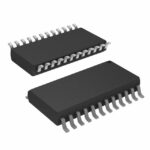 ZXF36L01W24
The activity of extra discounts on wholesale prices is in full swing…
Please fill in your contact information and we will send you the latest wholesale price list.





