 ChipApex | Global Electronic Components Supplier
SEARCH
Search Product
Search Post
— IC芯片 | 连接器 | 传感器 | 被动器件 —
Search productSearch post
— IC芯片 | 连接器 | 传感器 | 被动器件 —
Consult the customer manager about the wholesale price.
consultation hotline:86-132-6715-2157
email:[email protected]
Contact the product manager for consultation. One-stop consultation is available.
Do you want a lower wholesale price? Please send us your inquiry and we will reply immediately.
The ZXLD1370QESTTC is a single-output LED lighting driver IC from Diodes Incorporated, designed for non-isolated buck and boost topologies. It operates with an input voltage range of 6.3 V to 60 V and supports a maximum output current of 1.5 A. The device features an adjustable switching frequency up to 1 MHz and includes PWM dimming capabilities. Qualified under AEC-Q100 standards, it functions within a temperature range of -40 °C to +125 °C. Packaged in a TSSOP-16 EP format, it offers low quiescent current characteristics suitable for automotive and industrial LED applications.
Verify the specific suffix 'QESTTC' against the manufacturer's official datasheet to confirm package type and tape-and-reel specifications. Ensure the procurement channel provides valid traceability documentation required for AEC-Q100 qualified components. Cross-reference the manufacturing date code to ensure compliance with current RoHS3 directives. Confirm that the supplier handles ESD-sensitive devices appropriately during transit and storage.
Select this component when designing non-isolated LED drivers requiring wide input voltage compatibility and automotive reliability. It is suitable for applications demanding high efficiency through variable frequency operation. Consider the thermal performance of the TSSOP-16 EP package for heat dissipation requirements. Evaluate the need for external sense resistors and inductors based on the target output current and voltage levels defined by the application circuit design.
This part belongs to the ZXLD137x series of LED drivers from Diodes Incorporated. The 'Q' suffix typically denotes automotive qualification, while 'ESTTC' specifies the TSSOP-16 EP package and reel packaging configuration. It serves as a specialized solution for driving LEDs in environments where space constraints and regulatory compliance are critical factors in system design.
Direct substitutes include ZXLD1370EST16TC for standard commercial grade or ZXLD1371QESTTC for variants with different internal reference characteristics. Verify pin-to-pin compatibility and electrical parameter alignment before substitution.
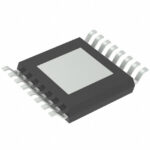 ZXLD1370QESTTC
The activity of extra discounts on wholesale prices is in full swing…
Please fill in your contact information and we will send you the latest wholesale price list.





