 ChipApex | Global Electronic Components Supplier
SEARCH
Search Product
Search Post
— IC芯片 | 连接器 | 传感器 | 被动器件 —
Search productSearch post
— IC芯片 | 连接器 | 传感器 | 被动器件 —
Consult the customer manager about the wholesale price.
consultation hotline:86-132-6715-2157
email:[email protected]
Contact the product manager for consultation. One-stop consultation is available.
Do you want a lower wholesale price? Please send us your inquiry and we will reply immediately.
The ZXRE250AW5-7 is an adjustable precision shunt regulator manufactured by Diodes Incorporated, housed in a SOT-25-5 package. It features a reference voltage tolerance of ±1.0% at +25°C and operates within a temperature range of -40°C to +125°C. The device supports an output voltage setting from 2.5V to 36V using external divider resistors. Key electrical parameters include a typical minimum cathode current for regulation of 40µA, a maximum continuous cathode current of 150mA, and a dynamic output impedance of 0.2Ω typical.
Verify component authenticity through authorized distributors or direct manufacturer channels. Confirm RoHS compliance status and check for specific environmental declarations such as halogen-free or antimony-free certifications. Review datasheet revision history for any updates to absolute maximum ratings or thermal resistance values before finalizing procurement specifications.
Select this component when a low-power adjustable shunt regulator is required with tight initial accuracy tolerances. Ensure the application circuit maintains cathode current between 0.065mA and 100mA for proper regulation. Consider the SOT-25 package dimensions and thermal dissipation characteristics relative to the expected ambient temperature conditions.
This part belongs to the ZXRE250 series of three-terminal adjustable shunt regulators. It serves as a functional alternative to industry-standard devices like the TL431 but distinguishes itself through significantly lower minimum cathode current requirements. The series is designed for precision voltage referencing and regulation tasks where power efficiency is critical.
Diodes Incorporated recommends using AP431SHA(B)N1TR-G1 as a replacement for ZXRE250B(A)SA-7 variants. Verify pinout compatibility and electrical parameter alignment when substituting with other shunt regulators from different manufacturers.
The typical minimum cathode current for regulation is 40µA.
The output voltage can be set to any value between 2.5V and 36V by selecting appropriate external divider resistors.
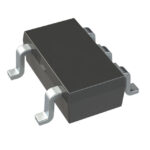 ZXRE250AW5-7
The activity of extra discounts on wholesale prices is in full swing…
Please fill in your contact information and we will send you the latest wholesale price list.






