 ChipApex | Global Electronic Components Supplier
SEARCH
Search Product
Search Post
— IC芯片 | 连接器 | 传感器 | 被动器件 —
Search productSearch post
— IC芯片 | 连接器 | 传感器 | 被动器件 —
Consult the customer manager about the wholesale price.
consultation hotline:86-132-6715-2157
email:[email protected]
Contact the product manager for consultation. One-stop consultation is available.
Do you want a lower wholesale price? Please send us your inquiry and we will reply immediately.
The ZXRE250BW5-7 is a three-terminal adjustable precision shunt regulator manufactured by Diodes Incorporated. It operates within a cathode voltage range of VREF to 36V and supports a sink current capability from 0.065mA to 100mA. The device features a typical minimum cathode current for regulation of 40µA, making it suitable for low-power applications. It offers an initial reference voltage tolerance of ±0.5% at +25°C, with a nominal reference voltage of 2.495V. The component is housed in a SOT-25 package and is designed for operation across a temperature range of -40°C to +125°C.
Verify the specific B grade designation confirms the ±0.5% initial tolerance specification required for the design. Confirm the W5 suffix corresponds to the SOT-25 package footprint and pinout compatibility with the target PCB layout. Ensure compliance with RoHS and halogen-free requirements matches project environmental standards. Check for any obsolescence notices or recommended new design alternatives provided by the manufacturer.
Select this component when a low quiescent current shunt regulator is needed to replace standard Zener diodes for improved accuracy. The B grade provides tighter initial voltage tolerance compared to the A grade. Consider the SOT-25 package size constraints and thermal dissipation capabilities relative to the expected load current. Verify that the application does not require high-frequency switching characteristics beyond the device's analog regulation limits.
This part belongs to the ZXRE25x series of adjustable shunt regulators from Diodes Incorporated. It shares electrical specifications with industry-standard '431 devices but distinguishes itself through a significantly lower minimum cathode current for regulation. The series includes variants with different tolerances and packages, such as the SA (SOT-23) and W5 (SOT-25) options.
Diodes Incorporated recommends using AP431SHA(B)N1TR-G1 as a replacement for the ZXRE250BSA-7 variant. Users should verify pinout compatibility and electrical parameter equivalence before substituting other generic shunt regulators.
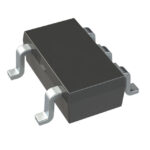 ZXRE250BW5-7
The activity of extra discounts on wholesale prices is in full swing…
Please fill in your contact information and we will send you the latest wholesale price list.







