 ChipApex | Global Electronic Components Supplier
SEARCH
Search Product
Search Post
— IC芯片 | 连接器 | 传感器 | 被动器件 —
Search productSearch post
— IC芯片 | 连接器 | 传感器 | 被动器件 —
The trend of science and technology is changing rapidly.
Las Vegas, January 6, 2026 — At the Consumer Electronics Show (CES) 2026, Texas Instruments (TI) (NASDAQ: TXN) announced a suite of next-generation semiconductor innovations designed to accelerate the development of software-defined vehicles (SDVs) and advanced driver-assistance systems (ADAS). The new offerings underscore TI’s strategic focus on enabling scalable, safe, and intelligent automotive architectures for mass-market adoption.
Headlining TI’s automotive announcements is the TDA5 series of high-performance system-on-chip (SoC) processors, engineered to deliver up to 1,200 TOPS of edge AI performance with an industry-leading energy efficiency of over 24 TOPS per watt. Built on TI’s latest C7™ Neural Processing Unit (NPU), the TDA5 SoC offers up to 12x higher AI compute than its predecessor—without requiring additional thermal management solutions.
The TDA5 platform supports chiplet-based designs using the UCIe interconnect standard, allowing automakers to scale performance across vehicle segments—from entry-level to premium—using a unified hardware and software foundation. Crucially, the SoC integrates Arm® Cortex®-A720AE cores and meets ISO 26262 ASIL-D safety requirements on-die, reducing reliance on external safety co-processors.
To shorten development cycles, TI has partnered with Synopsys to launch a virtual development kit featuring digital twin capabilities, which the company claims can accelerate SDV software deployment by up to 12 months.
Complementing its computing portfolio, TI introduced the AWR2188, a monolithic 8-transmit/8-receive (8T8R) 4D imaging radar transmitter. By integrating all RF channels into a single package, the AWR2188 eliminates the need for complex chip cascading—simplifying radar system design while supporting both satellite and edge radar architectures.
The device features enhanced ADC processing and chirp generation capabilities, delivering 30% higher performance than current solutions. It enables detection of objects beyond 350 meters and excels in high-dynamic-range scenarios—such as distinguishing closely spaced vehicles or identifying debris on highways—critical for Level 2+ and Level 3 autonomy.
TI also unveiled the DP83TD555J-Q1, a 10BASE-T1S Ethernet PHY with integrated MAC, nanosecond-level time synchronization, and power-over-data-line (PoDL) support. This device extends high-reliability Ethernet connectivity to remote sensors and actuators, reducing wiring complexity and cost in zonal and centralized E/E architectures.
“Semiconductors are the cornerstone of safer, smarter, and more automated mobility,” said Mark Ng, Director of TI’s Automotive Systems Business Unit. “From perception and communication to real-time decision-making, our end-to-end portfolio empowers engineers to bring advanced automotive experiences to every vehicle—not just the luxury segment.”
These launches come amid broader market shifts: TI recently initiated its largest-ever price increase in August 2025, affecting over 60,000 part numbers, particularly in industrial and compute-related analog ICs—a move reflecting sustained demand and constrained supply in key segments.
With these innovations, Texas Instruments reaffirms its leadership in automotive semiconductors, positioning itself not just as a component supplier, but as a systems enabler for the software-defined, AI-driven vehicle era.

DIODES Incorporated (Nasdaq: DIOD) announces an 8–15% global price increase across discrete, logic, analog, and mixed-signal products, effective April 1, 2026. Driven by raw material costs, logistics, and strong AI/automotive demand.
View details
The semiconductor industry enters the 2nm era in 2025. Rapidus debuts GAA transistors, Samsung launches Exynos 2600, and Infineon & Melexis advance automotive and IoT solutions amid supply chain shifts.
View details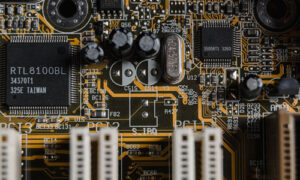
The rapid advancement of artificial intelligence (AI) is transforming industries across the globe, and the world of electronic components is no exception. From smarter semiconductors to self-optimizing circuits, AI is reshaping how electronic dev...
View details
Wolfspeed SiC modules, AMD MI430X with HBM4, TSMC’s Japan expansion, Samsung GDDR7—key semiconductor updates for global buyers in December 2025.
View details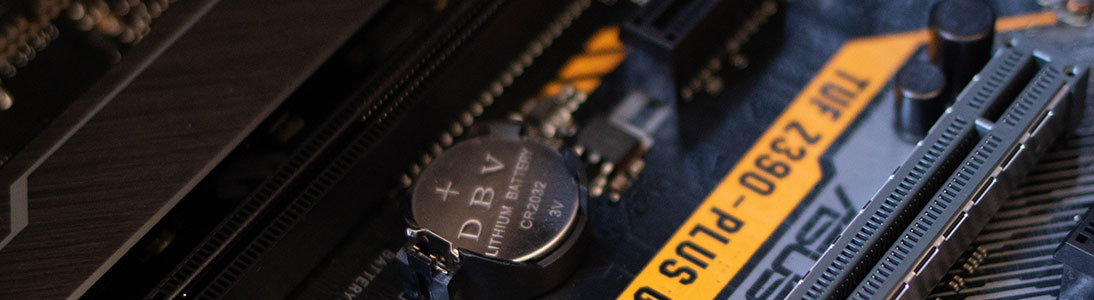
The activity of extra discounts on wholesale prices is in full swing…
Please fill in your contact information and we will send you the latest wholesale price list.