 ChipApex | Global Electronic Components Supplier
SEARCH
Search Product
Search Post
— IC芯片 | 连接器 | 传感器 | 被动器件 —
Search productSearch post
— IC芯片 | 连接器 | 传感器 | 被动器件 —
Consult the customer manager about the wholesale price.
consultation hotline:86-132-6715-2157
email:[email protected]
Contact the product manager for consultation. One-stop consultation is available.
Do you want a lower wholesale price? Please send us your inquiry and we will reply immediately.
The Altera 10AS016C4U19I3SG is an Arria 10 SX 160 SoC FPGA manufactured by Intel. It integrates a dual-core ARM Cortex-A9 processor with programmable logic containing 160,000 Logic Elements and 61,510 Adaptive Logic Modules. The device features 8.59 Mbit of embedded memory and six high-speed transceivers supporting data rates up to 17.4 Gb/s. It operates within a voltage range of 870 mV to 980 mV, with a typical operating voltage of 950 mV. The component supports a maximum frequency of 1.5 GHz and includes 288 I/O pins. It is housed in a UBGA-484 package, rated for commercial temperatures from -40°C to +100°C.
Verify the specific ordering suffix against official datasheets to confirm package type and temperature grade. Ensure compatibility with required design tools such as Quartus Prime. Confirm export control status if applicable, as some variants may require additional documentation for international shipping. Validate pinout assignments against the latest package drawings before PCB layout finalization.
Select this model when a balance of processing power and logic density is required for bandwidth-sensitive applications. Compare resource counts against alternative Arria 10 variants to ensure sufficient ALMs and transceivers are available. Verify that the UBGA-484 package fits the board space constraints. Consider thermal management requirements given the 20 nm process technology and operating voltage specifications.
This part belongs to the Arria 10 SX family, designed for cost-effective, power-efficient solutions. It shares architectural similarities with other Arria 10 devices but offers specific resource levels tailored for mid-range SoC applications. The series emphasizes integration of processing and programmable logic to reduce system complexity.
Direct substitutes include other Arria 10 SX models with similar logic counts, such as 10AS016E3F29I2SG, though pinouts and resources may differ. Verify functional equivalence and interface compatibility before substitution. Consult official cross-reference guides for validated alternatives.
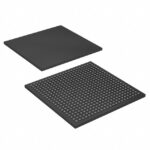 10AS016C4U19I3SG
The activity of extra discounts on wholesale prices is in full swing…
Please fill in your contact information and we will send you the latest wholesale price list.




