 ChipApex | Global Electronic Components Supplier
SEARCH
Search Product
Search Post
— IC芯片 | 连接器 | 传感器 | 被动器件 —
Search productSearch post
— IC芯片 | 连接器 | 传感器 | 被动器件 —
Consult the customer manager about the wholesale price.
consultation hotline:86-132-6715-2157
email:[email protected]
Contact the product manager for consultation. One-stop consultation is available.
Do you want a lower wholesale price? Please send us your inquiry and we will reply immediately.
The 113CNQ100SL is a Schottky rectifier diode array manufactured by SMC Diode Solutions. It features a dual common cathode configuration with a maximum repetitive peak reverse voltage of 100 V and an average forward current of 55 A per diode. The component utilizes the PRM2-SL surface mount package, designed for efficient thermal management in high-power applications. Key electrical characteristics include a typical forward voltage of approximately 870 mV at full load and a low reverse leakage current of 1.5 mA at rated voltage. The device supports a wide operating junction temperature range from -55°C to 175°C, ensuring reliability under demanding conditions.
Verify the specific suffix 'SL' to confirm the surface mount variant and lead-free compliance status. Ensure that the procurement documentation explicitly references the PRM2-SL package dimensions to avoid confusion with through-hole equivalents. Cross-reference the manufacturer part number against official distributor catalogs to confirm current production status and availability. Request RoHS3 compliance certificates if required for regulatory adherence in the target market.
Select this component when a surface mount solution is required for 100 V, 55 A dual diode applications. Evaluate the thermal resistance of the PRM2-SL package against the system's heat sinking capabilities. Consider the forward voltage drop impact on overall efficiency compared to alternative technologies. Verify that the PCB layout accommodates the specific pinout and footprint requirements of the PRM2-SL housing.
This part belongs to the CNQ series of Schottky rectifier arrays from SMC Diode Solutions. The series includes various voltage ratings and current capacities tailored for power electronics. The 'SL' designation typically indicates a surface mount version with specific packaging attributes. This family is engineered for high-efficiency power conversion systems requiring compact form factors.
The 113CNQ100 is the non-surface mount equivalent within the same product family. Direct substitution requires verifying package compatibility and thermal interface differences. Other manufacturers may offer similar specifications but will necessitate thorough electrical and mechanical validation before implementation.
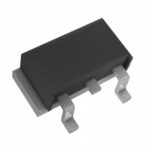 113CNQ100SL
The activity of extra discounts on wholesale prices is in full swing…
Please fill in your contact information and we will send you the latest wholesale price list.





