 ChipApex | Global Electronic Components Supplier

SEARCH
Search Product
Search Post
— IC芯片 | 连接器 | 传感器 | 被动器件 —
Search productSearch post
— IC芯片 | 连接器 | 传感器 | 被动器件 —
Consult the customer manager about the wholesale price.
consultation hotline:86-132-6715-2157
email:[email protected]
Contact the product manager for consultation. One-stop consultation is available.
Do you want a lower wholesale price? Please send us your inquiry and we will reply immediately.
The Geyer Electronic America, Inc. model 12.95116 is a ceramic surface-mount oscillator housed in a compact 4-SMD, no-lead package measuring 3.20mm x 2.50mm with a maximum height of 0.80mm. It operates at a fundamental frequency of 27 MHz using HCMOS output signals. The device supports a supply voltage range from -0.5V to 7V and features tri-state output enable functionality. It maintains a frequency stability of ±50ppm and draws a maximum supply current of 11mA during operation, reducing to 50µA when disabled. The component is rated for an operating temperature range of -40°C to 85°C.
Verify the specific frequency tolerance and load capacitance requirements against your circuit design before ordering. Confirm that the 4-SMD no-lead package dimensions align with your PCB footprint constraints. Ensure the supply voltage range of -0.5V to 7V matches your system's power rails. Check the operating temperature range of -40°C to 85°C for environmental suitability. Consult the official datasheet for detailed soldering reflow profiles and handling instructions.
Select this component when a 27 MHz HCMOS output is required in a small form factor. Consider the ±50ppm stability if high precision is not critical. Evaluate the 11mA active current consumption against battery life requirements. The tri-state feature allows for easy integration into bus-based systems. Compare package size against available board space to ensure fitment.
This oscillator belongs to the KXO-V96 series from Geyer Electronic America, Inc., designed for general-purpose timing applications. The series offers various frequency options within a standardized ceramic SMD package. These components are commonly used in consumer electronics and industrial equipment where reliable clock generation is essential. The manufacturer focuses on quartz crystals and oscillators for demanding frequency control needs.
Direct substitutes must match the 27 MHz frequency, HCMOS output type, and 4-SMD package dimensions. Verify equivalent electrical parameters such as supply voltage range and current consumption. Cross-reference part numbers from authorized distributors for compatible alternatives. Ensure thermal characteristics and stability ratings meet or exceed original specifications.
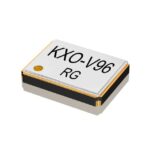 12.95116

The activity of extra discounts on wholesale prices is in full swing…
Please fill in your contact information and we will send you the latest wholesale price list.





