 ChipApex | Global Electronic Components Supplier
SEARCH
Search Product
Search Post
— IC芯片 | 连接器 | 传感器 | 被动器件 —
Search productSearch post
— IC芯片 | 连接器 | 传感器 | 被动器件 —
Consult the customer manager about the wholesale price.
consultation hotline:86-132-6715-2157
email:[email protected]
Contact the product manager for consultation. One-stop consultation is available.
Do you want a lower wholesale price? Please send us your inquiry and we will reply immediately.
The Würth Elektronik part number 14230316011 is a Triac and SCR Output Optocoupler belonging to the WL-OCTR series. It features a DIP-6 through-hole package with one channel. The device includes an integrated zero-crossing circuit for precise switching control. Key electrical parameters include a maximum repetitive peak off-state voltage (VDRM) of 250 V, an isolation voltage of 5000 Vrms, and a forward current (IF) of 60 mA. The operating temperature range extends from -40°C to +100°C.
Verify component authenticity by checking the marking code '3031' on the DIP-6 package against official Wurth documentation. Confirm RoHS compliance status via the manufacturer's certificate of conformity. Ensure storage conditions maintain moisture sensitivity level integrity prior to surface mount or through-hole reflow processes.
Select this component when AC load switching requires precise timing synchronization to minimize electromagnetic interference. The 250 V rating suits low-voltage AC mains applications. Consider the 60 mA forward current limit for LED drive requirements. The DIP-6 form factor facilitates easy integration into legacy PCB layouts requiring through-hole mounting.
This optocoupler belongs to the WL-OCTR family designed for industrial AC switching. It combines a GaAs infrared LED with a triac output detector. The series emphasizes safety isolation and noise immunity. Competing products typically offer similar isolation but may lack integrated zero-crossing logic, affecting switching precision in sensitive AC control environments.
Public confirmed substitute part numbers are not available in the provided documentation. Verify pinout compatibility and isolation voltage ratings before considering alternative manufacturers. Ensure thermal characteristics match the original design constraints.
The zero-crossing circuit ensures the triac turns on only when the AC voltage crosses zero, reducing electrical noise and inrush current spikes.
The device supports an isolation voltage of 5000 Vrms between the input LED and output triac.
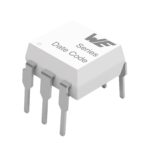 14230316011
The activity of extra discounts on wholesale prices is in full swing…
Please fill in your contact information and we will send you the latest wholesale price list.





