 ChipApex | Global Electronic Components Supplier
SEARCH
Search Product
Search Post
— IC芯片 | 连接器 | 传感器 | 被动器件 —
Search productSearch post
— IC芯片 | 连接器 | 传感器 | 被动器件 —
Consult the customer manager about the wholesale price.
consultation hotline:86-132-6715-2157
email:[email protected]
Contact the product manager for consultation. One-stop consultation is available.
Do you want a lower wholesale price? Please send us your inquiry and we will reply immediately.
The Renesas Electronics Corporation 1893AFLF is a fully integrated Physical Layer device (PHY) compliant with IEEE 802.3 standards for 10Base-T and 100Base-TX Ethernet networks. Operating on a single 3.3V power supply, this component integrates the PCS, PMA, PMD, and Auto-Negotiation sublayers into a single chip. It utilizes a low-power 0.35-micron CMOS process, typically consuming 400 mW. The device supports both half-duplex and full-duplex modes at 10M or 100M speeds, featuring DSP-based baseline wander correction and adaptive equalization to ensure signal integrity over Category 5 cables.
Verify component authenticity through authorized channels due to discontinued status. Confirm RoHS compliance details via official documentation before integration. Ensure storage conditions meet moisture sensitivity level requirements to prevent package damage during assembly.
Select this component for applications requiring a cost-effective, single-chip PHY solution for standard Ethernet connections. Consider the 48-lead SSOP package constraints regarding board space. Verify compatibility with the target system's voltage levels and MII interface requirements prior to design finalization.
This part belongs to the Integrated Device Technology (IDT) product line, now part of Renesas Electronics. It serves as a lower-cost alternative to the ICS1893Y-10, utilizing the same silicon but packaged in a more economical 300 mil SSOP format. It addresses the need for compact, low-power Ethernet connectivity in embedded systems.
The ICS1893AGI is a documented similar part number within the same family. Verify pinout and feature parity against the specific datasheet revision before substitution. No other direct cross-references are confirmed in public documentation.
Yes, the device includes fully integrated Auto-Negotiation functionality with parallel detection for legacy products.
The typical power consumption is 400 mW when operating under standard conditions.
Yes, the 1893AFLF is available in an industrial temperature variant.
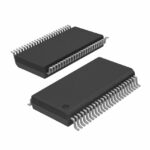 1893AFLF
The activity of extra discounts on wholesale prices is in full swing…
Please fill in your contact information and we will send you the latest wholesale price list.





