ChipApex | Global Electronic Components Supplier
SEARCH
Search Product
Search Post
— IC芯片 | 连接器 | 传感器 | 被动器件 —
Search productSearch post
— IC芯片 | 连接器 | 传感器 | 被动器件 —
Consult the customer manager about the wholesale price.
consultation hotline:86-132-6715-2157
email:[email protected]
Contact the product manager for consultation. One-stop consultation is available.
Do you want a lower wholesale price? Please send us your inquiry and we will reply immediately.
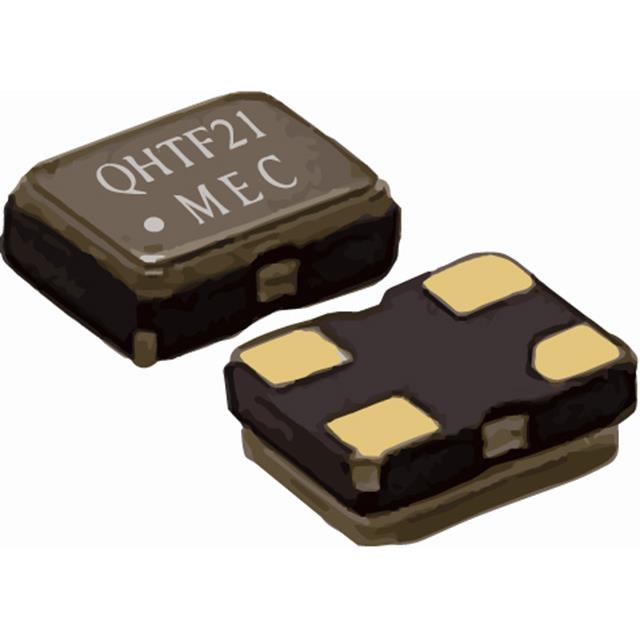
The Mercury Electronics 18QHTF21-109.000-PD is a high-stability crystal oscillator designed for precision timing applications. It operates at a fundamental frequency of 109.000 MHz, housed in a compact 1812 (4532 metric) surface-mount package. The device utilizes a PMOS output stage and supports a parallel resonant load configuration. Key electrical specifications include a supply voltage range of 1.8V to 3.3V, with a typical current consumption of 6mA. Frequency stability is maintained within ±10ppm over the commercial temperature range of -20°C to +70°C, ensuring reliable performance in demanding electronic systems requiring accurate clock signals.
Verify the specific ordering suffix against the manufacturer's latest datasheet to ensure correct pinout and electrical parameters. Confirm that the requested part number matches the exact frequency tolerance and operating temperature range required by your design. Cross-reference the package dimensions with your PCB footprint library to guarantee mechanical compatibility before finalizing procurement orders.
Select this component when designing circuits that demand a stable 109MHz reference signal in a small form factor. Ensure the host system provides a clean power supply within the specified voltage range to maintain frequency accuracy. Consider thermal management requirements if the operating environment exceeds standard commercial temperature limits, as stability may vary outside the rated range.
This oscillator belongs to Mercury Electronics's series of high-performance surface-mount crystal oscillators. These components are engineered to replace discrete crystal and buffer combinations, offering reduced board space and improved signal integrity. The 18QHTF21 series is widely used in applications where size constraints and timing precision are critical design factors.
Direct replacements must match the 109.000MHz frequency, 1812 package, and PMOS output type. Verify equivalent stability and voltage specifications from alternative manufacturers to ensure functional parity without circuit redesign.
 18QHTF21-109.000-PD
The activity of extra discounts on wholesale prices is in full swing…
Please fill in your contact information and we will send you the latest wholesale price list.