 ChipApex | Global Electronic Components Supplier

SEARCH
Search Product
Search Post
— IC芯片 | 连接器 | 传感器 | 被动器件 —
Search productSearch post
— IC芯片 | 连接器 | 传感器 | 被动器件 —
Consult the customer manager about the wholesale price.
consultation hotline:86-132-6715-2157
email:[email protected]
Contact the product manager for consultation. One-stop consultation is available.
Do you want a lower wholesale price? Please send us your inquiry and we will reply immediately.
The 18QHTF21-57.363667-OE is a crystal oscillator manufactured by Mercury Electronics Ind. Co. Ltd. This component operates at a fundamental frequency of 57.363667 MHz. It utilizes a TCXO (Temperature Compensated Crystal Oscillator) architecture to ensure frequency stability across varying environmental temperatures. The device is housed in a surface-mount package, specifically the 18QHTF21 form factor, designed for integration into compact electronic systems requiring precise timing references.
Verify the specific load capacitance and drive level requirements against your circuit design before procurement. Confirm that the operating temperature range specified in the official datasheet aligns with your application's environmental conditions. Ensure compatibility with the reflow soldering profile recommended by Mercury Electronics to prevent damage during assembly. Cross-reference the pinout configuration with your PCB layout to guarantee correct electrical connections.
Select this component when high frequency stability is critical over a wide temperature range. Consider the size constraints of your PCB as the 18QHTF21 package offers a specific footprint. Evaluate power consumption requirements, as TCXOs typically draw more current than standard crystals. Verify that the output signal type matches your receiver's input specifications. Assess long-term aging characteristics if the application demands extended operational lifespan without recalibration.
This part belongs to Mercury Electronics' line of temperature-compensated crystal oscillators. These components are engineered to replace less stable resonators in applications where frequency drift could compromise system performance. The 18QHTF21 series represents a standardized package solution within their portfolio, facilitating easier integration for designers seeking reliable timing solutions without custom development.
Consult Mercury Electronics' official substitution guide for direct replacements. Verify that any alternative part number maintains identical frequency, package dimensions, and electrical characteristics. Ensure that substitute components meet the same temperature compensation standards. Check for availability of updated revisions or superseded parts from the manufacturer.
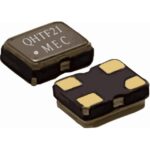 18QHTF21-57.363667-OE

The activity of extra discounts on wholesale prices is in full swing…
Please fill in your contact information and we will send you the latest wholesale price list.




