 ChipApex | Global Electronic Components Supplier

SEARCH
Search Product
Search Post
— IC芯片 | 连接器 | 传感器 | 被动器件 —
Search productSearch post
— IC芯片 | 连接器 | 传感器 | 被动器件 —
Consult the customer manager about the wholesale price.
consultation hotline:86-132-6715-2157
email:[email protected]
Contact the product manager for consultation. One-stop consultation is available.
Do you want a lower wholesale price? Please send us your inquiry and we will reply immediately.
The 18QHTF21-6.16791-OE is a standard crystal oscillator manufactured by Mercury Electronics Ind. Co. Ltd. It operates at a nominal frequency of 6.16791 MHz with a stability of ±50 ppm. The device utilizes an LVCMOS output signal and requires a supply voltage of 1.8V. It features an Enable/Disable control function for power management. The component is housed in a compact 4-SMD, No Lead package with dimensions of 2.0x1.6mm. It supports an operating temperature range from -40°C to 85°C and has a maximum supply current of 21 mA.
Verify the specific ordering suffix matches the required enable/disable functionality versus standby modes. Confirm the package dimensions align with PCB footprint requirements. Ensure the supply voltage rating corresponds to the target system's rail. Check temperature range specifications against environmental conditions. Validate authenticity through authorized distribution channels to avoid counterfeit components.
Choose this oscillator when a 6.16791 MHz reference is necessary for digital logic interfaces. Consider the 1.8V supply requirement for compatibility with modern low-power microcontrollers. Evaluate the ±50 ppm stability against system jitter tolerance. Assess the small form factor benefits for high-density board layouts. Compare alternative frequencies if the exact value is not critical for the application.
This component belongs to the QHT series of quartz crystal oscillators from Mercury Electronic Ind. Co., Ltd. The series focuses on providing reliable timing solutions for various electronic applications. Mercury Electronics specializes in frequency control products, including crystals and oscillators, serving industries that require precise timekeeping. The company has a long history in manufacturing quartz-based components.
Direct substitutes include other 6.16791 MHz LVCMOS oscillators with similar voltage and package constraints. Verify pinout compatibility before swapping. Ensure equivalent stability and temperature ranges are maintained. Check for identical enable/disable logic levels. Consult manufacturer cross-reference lists for verified alternatives.
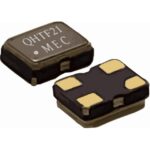 18QHTF21-6.16791-OE

The activity of extra discounts on wholesale prices is in full swing…
Please fill in your contact information and we will send you the latest wholesale price list.





