 ChipApex | Global Electronic Components Supplier
SEARCH
Search Product
Search Post
— IC芯片 | 连接器 | 传感器 | 被动器件 —
Search productSearch post
— IC芯片 | 连接器 | 传感器 | 被动器件 —
Consult the customer manager about the wholesale price.
consultation hotline:86-132-6715-2157
email:[email protected]
Contact the product manager for consultation. One-stop consultation is available.
Do you want a lower wholesale price? Please send us your inquiry and we will reply immediately.
The 18QHTF21-72.8177-OE is a standard crystal oscillator manufactured by Mercury Electronic Ind. Co., Ltd. It operates at a frequency of 72.8177 MHz with an LVCMOS output logic level. The device requires a supply voltage of 1.8V and supports enable/disable functionality for power management. Frequency stability is rated at ±50ppm, ensuring precise timing performance across the operating temperature range of -40°C to 85°C. Maximum current consumption is specified as 26mA. The component utilizes a surface-mount package design suitable for automated assembly processes in compact electronic systems.
Verify the exact suffix (OE vs PD) against the manufacturer's official documentation to confirm specific testing or packaging variations. Ensure compatibility with 1.8V logic levels in the target circuit design. Confirm that the LVCMOS output swing meets the input requirements of downstream components. Check for any specific handling instructions regarding electrostatic discharge sensitivity during installation.
Select this component when a stable 72.8177 MHz reference is required in space-constrained designs. The low voltage requirement makes it suitable for battery-powered or low-power applications. Consider the ±50ppm stability specification against the system's jitter tolerance requirements. Evaluate the thermal performance within the -40°C to 85°C range to ensure reliability under varying environmental conditions.
Mercury Electronic Ind. Co., Ltd specializes in frequency control products including quartz crystals and oscillators. This model belongs to their standard XO series, designed for general-purpose timing applications. The company has extensive experience in Taiwan's crystal industry, providing reliable timing solutions for various electronic sectors.
Direct substitutes may include other 72.8177 MHz LVCMOS oscillators from different manufacturers with compatible pinouts and electrical specifications. Verify that alternative parts meet the same ±50ppm stability and 1.8V supply requirements. Ensure the replacement maintains the same physical dimensions for board compatibility.
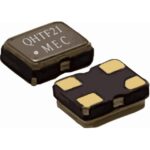 18QHTF21-72.8177-OE
The activity of extra discounts on wholesale prices is in full swing…
Please fill in your contact information and we will send you the latest wholesale price list.




