 ChipApex | Global Electronic Components Supplier
SEARCH
Search Product
Search Post
— IC芯片 | 连接器 | 传感器 | 被动器件 —
Search productSearch post
— IC芯片 | 连接器 | 传感器 | 被动器件 —
Consult the customer manager about the wholesale price.
consultation hotline:86-132-6715-2157
email:[email protected]
Contact the product manager for consultation. One-stop consultation is available.
Do you want a lower wholesale price? Please send us your inquiry and we will reply immediately.
The 18QHTF21-87.316-OE is a standard crystal oscillator manufactured by Mercury Electronics Ind. Co. Ltd. It operates at a fixed frequency of 87.316 MHz and utilizes LVCMOS output logic for digital signal interfacing. The device supports a supply voltage of 1.8V and includes an enable/disable control function to manage power consumption. It is housed in a compact 4-SMD, No Lead package, designed for surface-mount assembly on printed circuit boards. This component serves as a precise clock source for electronic systems requiring stable timing signals.
Verify the specific frequency tolerance and load capacitance requirements against the target circuit design before procurement. Confirm that the 1.8V supply rail aligns with the system's power architecture. Ensure the PCB footprint matches the 4-SMD No Lead package dimensions provided in the official datasheet. Check for any specific reflow soldering profile recommendations to maintain component integrity during assembly processes.
Select this oscillator when a precise 87.316 MHz reference is required for LVCMOS-compatible digital circuits. Consider the 1.8V operating voltage constraint relative to other available supply options. Evaluate the physical size constraints imposed by the 4-SMD No Lead package against board space limitations. Assess whether the enable/disable feature provides necessary power savings for the intended application environment compared to always-on alternatives.
This model belongs to the Mercury Electronic XO series, which specializes in quartz-based frequency control products. The manufacturer has extensive experience in producing crystals and oscillators since 1973. The product line focuses on providing reliable timing solutions for various industrial and commercial applications. The specific part number indicates a standard configuration within their oscillator portfolio.
Direct substitutes may include other 87.316 MHz LVCMOS oscillators from different manufacturers if pinout and electrical specifications match. Verify equivalent frequency stability and phase noise characteristics. Ensure compatible supply voltage and package dimensions for seamless integration without redesigning the PCB layout.
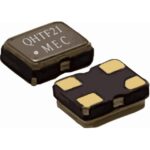 18QHTF21-87.316-OE
The activity of extra discounts on wholesale prices is in full swing…
Please fill in your contact information and we will send you the latest wholesale price list.





