 ChipApex | Global Electronic Components Supplier
SEARCH
Search Product
Search Post
— IC芯片 | 连接器 | 传感器 | 被动器件 —
Search productSearch post
— IC芯片 | 连接器 | 传感器 | 被动器件 —
Consult the customer manager about the wholesale price.
consultation hotline:86-132-6715-2157
email:[email protected]
Contact the product manager for consultation. One-stop consultation is available.
Do you want a lower wholesale price? Please send us your inquiry and we will reply immediately.
The Microchip Technology 1N5294 is a silicon planar junction Zener diode designed for voltage regulation and reference applications. It features a glass passivated junction and is available in the DO-35 axial leaded package, which facilitates automated insertion. The device provides stable voltage regulation with low impedance characteristics. Key electrical parameters include a nominal Zener voltage of 100 V at a test current of 2.6 mA. The maximum Zener impedance is specified at 70 ohms under these conditions. The device operates within a temperature range of -65°C to +175°C, ensuring reliability in demanding environments. Power dissipation is rated at 500 mW.
Verify the specific ordering suffix to confirm exact electrical tolerances and packaging options. Ensure compatibility with existing board layouts regarding axial lead spacing. Confirm that the selected variant meets the required power dissipation and thermal management specifications for the intended application environment.
Select this component when a precise 100 V regulation point is required in a compact axial package. Consider the 500 mW power rating and thermal resistance when designing heat dissipation strategies. Evaluate the Zener impedance specification against circuit sensitivity requirements to ensure adequate noise performance and regulation accuracy under varying load conditions.
This component belongs to the standard 1N series of Zener diodes, widely used in discrete semiconductor applications. It serves as a fundamental passive element for establishing fixed voltage levels in analog and digital circuits. The DO-35 package represents a traditional form factor still prevalent in legacy designs and specific industrial equipment requiring robust axial leads.
Substitute parts must match the 100 V Zener voltage, 500 mW power rating, and DO-35 package dimensions. Verify equivalent Zener impedance and test current specifications to maintain circuit performance. Cross-reference manufacturer datasheets for thermal characteristics and reverse leakage current limits.
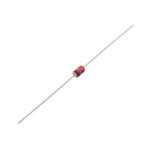 1N5294
The activity of extra discounts on wholesale prices is in full swing…
Please fill in your contact information and we will send you the latest wholesale price list.





