 ChipApex | Global Electronic Components Supplier
SEARCH
Search Product
Search Post
— IC芯片 | 连接器 | 传感器 | 被动器件 —
Search productSearch post
— IC芯片 | 连接器 | 传感器 | 被动器件 —
Consult the customer manager about the wholesale price.
consultation hotline:86-132-6715-2157
email:[email protected]
Contact the product manager for consultation. One-stop consultation is available.
Do you want a lower wholesale price? Please send us your inquiry and we will reply immediately.
The Central Semiconductor CMJD1500 TR is a surface-mount silicon field-effect current regulator diode housed in the DFN123F package. It provides a nominal regulator current of 1.5 mA with a maximum peak operating voltage of 100 V and power dissipation of 445 mW at 25°C. The device maintains operation across a junction temperature range of -65°C to +150°C. Key electrical parameters include a minimum dynamic impedance of 0.45 MΩ, a minimum knee impedance of 70 kΩ, and a maximum limiting voltage of 2.0 V.
Verify the specific ordering suffix required for plating configuration when placing orders. The PBFREE suffix indicates lead-free plating, while TIN/LEAD specifies tin-lead options. Confirm that the reel packaging matches the intended automated assembly requirements. Ensure the component meets RoHS compliance standards if applicable to the final product regulations.
Select the CMJD1500 for circuits requiring a nominal 1.5 mA constant current. Evaluate the thermal resistance of 280 °C/W for standard mounting conditions versus 160 °C/W on a PCB with adequate copper traces. Consider the negative temperature coefficient ranging from -0.13 to -0.40 %/°C for stability analysis within the specified operating temperature range.
This component belongs to the CMJD0130 through CMJD5750 series of surface mount silicon current limiting diodes. All devices in this family share the same DFN123F package and fundamental operational principles, differing primarily in their specific regulator current ratings and associated impedance values.
Publicly confirmed substitute part numbers are not available in the provided documentation. Designers should consult the manufacturer's application engineering team for potential cross-references or custom screening options.
The marking code for the CMJD1500 is C152.
It replaces the tail resistor to provide high impedance, regulating circuit current and increasing the common mode rejection ratio compared to traditional resistive tails.
The regulator current is measured using a pulsed method where the pulse width in milliseconds equals 27.5 divided by the nominal current in milliamperes.
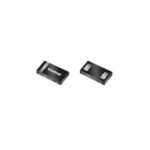 CMJD1500 TR
The activity of extra discounts on wholesale prices is in full swing…
Please fill in your contact information and we will send you the latest wholesale price list.




