 ChipApex | Global Electronic Components Supplier
SEARCH
Search Product
Search Post
— IC芯片 | 连接器 | 传感器 | 被动器件 —
Search productSearch post
— IC芯片 | 连接器 | 传感器 | 被动器件 —
Consult the customer manager about the wholesale price.
consultation hotline:86-132-6715-2157
email:[email protected]
Contact the product manager for consultation. One-stop consultation is available.
Do you want a lower wholesale price? Please send us your inquiry and we will reply immediately.
The 1N5304UR-1 is a current regulator diode manufactured by Microchip Technology, designed for surface-mount applications. It utilizes the DO-213AB (MELF) glass package to provide stable current regulation in compact circuits. The device supports a maximum voltage of 100V and operates within an extended junction temperature range from -65°C to +175°C. Key electrical parameters include a maximum regulator current of 1.98mA and a peak operating voltage of 100V. The component features a minimum dynamic impedance of 420 uohms and a maximum regulator voltage of 1.75V, ensuring consistent performance under varying load conditions.
Verify the specific suffix UR-1 against the official Microchip datasheet to confirm the exact package type and manufacturing lot details. Ensure that the procurement channel provides valid traceability documentation, as this component may be subject to export controls or restricted distribution channels depending on the final application and destination region.
Select the 1N5304UR-1 when a fixed current of approximately 1.98mA is required in a space-constrained surface-mount layout. Compare the 1.75V maximum regulator voltage against the available headroom in the circuit design. Ensure the power dissipation capabilities align with the thermal management strategy, considering the 500mW typical rating associated with this family.
This component belongs to the 1N53xx series of current regulator diodes produced by Microchip Technology. These devices are engineered to replace traditional Zener-based constant current solutions, offering superior stability and lower noise. The UR-1 designation typically indicates a specific surface-mount variant within the broader MIL-PRF-19500/463 qualified product line.
Direct substitutes include other 1.98mA current regulator diodes in the DO-213AB package, such as the JANTX1N5304-1/TR. Verify pinout compatibility and thermal characteristics before substitution. Cross-referencing with the manufacturer's official replacement guide is recommended to ensure functional equivalence.
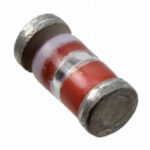 1N5304UR-1
The activity of extra discounts on wholesale prices is in full swing…
Please fill in your contact information and we will send you the latest wholesale price list.





