 ChipApex | Global Electronic Components Supplier
SEARCH
Search Product
Search Post
— IC芯片 | 连接器 | 传感器 | 被动器件 —
Search productSearch post
— IC芯片 | 连接器 | 传感器 | 被动器件 —
Consult the customer manager about the wholesale price.
consultation hotline:86-132-6715-2157
email:[email protected]
Contact the product manager for consultation. One-stop consultation is available.
Do you want a lower wholesale price? Please send us your inquiry and we will reply immediately.
The Central Semiconductor Corp 1N5313 TR TIN/LEAD is a silicon planar power rectifier diode designed for general-purpose applications. It features a maximum average forward rectified current of 1.0 A and a repetitive peak reverse voltage of 200 V. The device utilizes a DO-41 axial leaded package, suitable for through-hole mounting on printed circuit boards. Key electrical specifications include a maximum DC reverse leakage current of 5.0 µA at rated voltage and a low forward voltage drop of 1.1 V at full load current. The component is rated for a maximum operating junction temperature of 175 °C and supports a surge current of up to 30 A for non-repetitive half-sine wave pulses lasting 8.3 ms.
Verify the specific ordering suffix against the manufacturer's latest datasheet to confirm lead-free compliance status, as tin/lead variants may differ from standard RoHS versions. Confirm the reel quantity matches production requirements before finalizing orders. Request updated availability and lead times directly from authorized distributors or the manufacturer, as stock levels for specific packaging configurations fluctuate frequently.
Select this component when a 1.0 A continuous current rating and 200 V blocking capability are required for through-hole implementations. Ensure the PCB layout accommodates the DO-41 axial dimensions and provides adequate spacing for the specified voltage ratings. Consider thermal management requirements if the ambient temperature approaches the upper operational limit of 175 °C.
This part belongs to the standard silicon rectifier series manufactured by Central Semiconductor Corp. It serves as a discrete power diode within their broader portfolio of semiconductor devices. The DO-41 package is a widely recognized industry standard for axial leaded diodes, facilitating easy integration into legacy and modern PCB designs requiring reliable power conversion components.
Equivalent parts include the 1N5313B and other generic 1N53xx series diodes with matching 1.0 A and 200 V ratings. Verify pinout compatibility and physical dimensions before substitution. Ensure replacement components meet the same thermal and electrical safety certifications required for the original design.
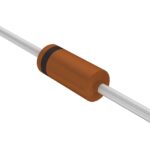 1N5313 TR TIN/LEAD
The activity of extra discounts on wholesale prices is in full swing…
Please fill in your contact information and we will send you the latest wholesale price list.





