 ChipApex | Global Electronic Components Supplier
SEARCH
Search Product
Search Post
— IC芯片 | 连接器 | 传感器 | 被动器件 —
Search productSearch post
— IC芯片 | 连接器 | 传感器 | 被动器件 —
Consult the customer manager about the wholesale price.
consultation hotline:86-132-6715-2157
email:[email protected]
Contact the product manager for consultation. One-stop consultation is available.
Do you want a lower wholesale price? Please send us your inquiry and we will reply immediately.
The 1N5400G-K is a general-purpose silicon rectifier diode manufactured by Taiwan Semiconductor Corporation. It features a standard recovery characteristics with a maximum average forward rectified current of 3A and a peak repetitive reverse voltage of 50V. The device utilizes a glass passivated junction for enhanced stability and is housed in the DO-201AD axial leaded package. Key electrical parameters include a low forward voltage drop, minimal leakage current, and high surge current capability, making it suitable for various power supply applications.
Verify the specific suffix K against official Taiwan Semiconductor documentation to confirm if it denotes a distinct packaging variant or marking code rather than a functional change. Ensure the component matches the DO-201AD package dimensions and lead configuration required by your PCB layout. Cross-reference the manufacturer's latest datasheet to confirm RoHS compliance status and any recent manufacturing changes that may affect form, fit, or function during procurement.
Select this component when a 3A standard recovery rectifier with a 50V reverse voltage rating is required. It serves as a direct replacement for legacy 1N5400 designs where glass passivation offers superior reliability compared to plastic encapsulated alternatives. Consider its thermal management requirements based on the DO-201AD package's heat dissipation capabilities in enclosed environments.
This part belongs to the widely recognized 1N54xx series of general-purpose rectifiers. The 'G' suffix typically indicates Green/RoHS compliance, while the 'K' suffix requires verification for specific packaging or marking variations. As a standard industry component, it is compatible with numerous equivalent parts from other manufacturers offering similar electrical specifications and mechanical footprints.
Direct substitutes include 1N5400 variants from Vishay, onsemi, and SMC Diode Solutions. Verify that alternative parts maintain the same DO-201AD package and 3A/50V ratings. Ensure compatibility with existing board space and thermal constraints before swapping manufacturers.
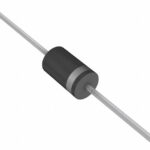 1N5400G-K
The activity of extra discounts on wholesale prices is in full swing…
Please fill in your contact information and we will send you the latest wholesale price list.







