ChipApex | Global Electronic Components Supplier
SEARCH
Search Product
Search Post
— IC芯片 | 连接器 | 传感器 | 被动器件 —
Search productSearch post
— IC芯片 | 连接器 | 传感器 | 被动器件 —
Consult the customer manager about the wholesale price.
consultation hotline:86-132-6715-2157
email:[email protected]
Contact the product manager for consultation. One-stop consultation is available.
Do you want a lower wholesale price? Please send us your inquiry and we will reply immediately.
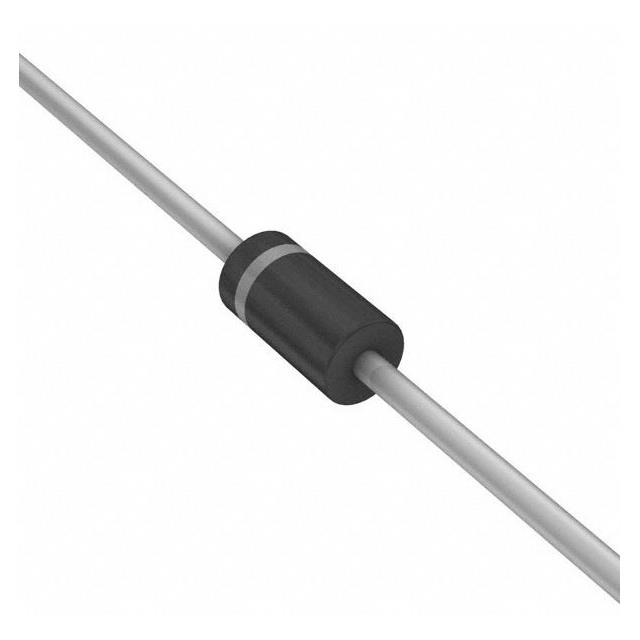
The onsemi 1N5408G is an axial-lead glass-passivated standard recovery rectifier designed for power supply applications. It features a maximum average forward rectified current of 3.0 A and a peak repetitive reverse voltage of 1000 V. The device operates within a junction temperature range of -65°C to +150°C and supports a non-repetitive peak surge current of 200 A. Electrical characteristics include a maximum forward voltage of 1.0 V at 3.0 A and a maximum reverse current of 10 µA at rated DC voltage.
Verify the specific ordering suffix, such as 'RLG' for tape and reel packaging or absence thereof for box quantities, against the manufacturer's official documentation. Confirm compliance with RoHS and Pb-Free requirements by checking the product marking diagram and datasheet revision history. Ensure the requested quantity matches the available shipping formats provided in the ordering information table.
Select this component when a 1000 V blocking voltage and 3.0 A continuous current rating are required for standard recovery applications. Consider the thermal resistance values and derating curves if operating near maximum temperature limits. Verify that the axial lead configuration fits the mechanical constraints of the target PCB layout or chassis mounting design.
This part belongs to the 1N5400 through 1N5408 series of axial-lead standard recovery rectifiers manufactured by onsemi. The series shares identical mechanical and electrical characteristics except for the reverse voltage rating, which varies from 50 V to 1000 V across the lineup. All devices utilize the same Case 267-05 package style.
Cross-reference with other manufacturers' 1N5408 equivalents to ensure pinout compatibility and matching electrical ratings. Verify that substitute components meet the same glass passivation and UL 94 V-0 flammability standards if specified in the original design.
The maximum non-repetitive peak surge current is 200 A for one cycle of an 8 ms single half-sine-wave.
Polarity is indicated by a polarity band on the cathode end of the component.
 1N5408G
The activity of extra discounts on wholesale prices is in full swing…
Please fill in your contact information and we will send you the latest wholesale price list.