 ChipApex | Global Electronic Components Supplier
SEARCH
Search Product
Search Post
— IC芯片 | 连接器 | 传感器 | 被动器件 —
Search productSearch post
— IC芯片 | 连接器 | 传感器 | 被动器件 —
Consult the customer manager about the wholesale price.
consultation hotline:86-132-6715-2157
email:[email protected]
Contact the product manager for consultation. One-stop consultation is available.
Do you want a lower wholesale price? Please send us your inquiry and we will reply immediately.
The Microchip Technology 1N5811URS/TR is a military-qualified ultrafast recovery glass rectifier. It features a void-less hermetically sealed MELF package with one square and one round end cap. The device supports a working peak reverse voltage of 150 V and an average rectified output current of 6.0 A at 75°C case temperature, or 3.0 A at 55°C ambient temperature. Key electrical parameters include a maximum forward voltage of 0.875 V at 4 A, a reverse leakage current of 5 µA at 150 V, and a reverse recovery time of 30 ns. It operates within a junction temperature range of -65°C to +175°C.
Verify the specific qualification level (JAN, JANTX, JANTXV, or JANS) required for your application, as the base part number covers multiple grades. Confirm RoHS compliance status, noting that compliant versions are available only on commercial grade parts. Ensure the URS package configuration matches your PCB footprint requirements before ordering.
Select this component when a hermetically sealed, ultrafast recovery diode is needed for harsh environments. The 1N5811 variant provides 150 V reverse voltage support. Consider the thermal derating curves if operating near the maximum junction temperature limits. Verify lead length specifications for through-hole mounting if applicable.
This device belongs to the 1N5807US, 1N5809US, 1N5811US, and URS series of ultrafast recovery glass rectifiers. It serves as the surface mount equivalent to the axial-leaded 1N5811 series while maintaining military-grade reliability standards. The URS designation specifically indicates the mixed end-cap MELF package style.
Direct replacements must match the 150 V rating, 6 A current capacity, and 30 ns reverse recovery time. Verify that substitute components offer comparable hermetic sealing and radiation hardness if used in qualified systems.
The 'URS' suffix denotes a specific surface mount MELF package configuration where one end cap is square and the other is round.
Yes, the datasheet states the device is inherently radiation hard as described in Microsemi MicroNote 050.
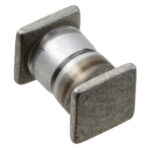 1N5811URS/TR
The activity of extra discounts on wholesale prices is in full swing…
Please fill in your contact information and we will send you the latest wholesale price list.





