ChipApex | Global Electronic Components Supplier
SEARCH
Search Product
Search Post
— IC芯片 | 连接器 | 传感器 | 被动器件 —
Search productSearch post
— IC芯片 | 连接器 | 传感器 | 被动器件 —
Consult the customer manager about the wholesale price.
consultation hotline:86-132-6715-2157
email:[email protected]
Contact the product manager for consultation. One-stop consultation is available.
Do you want a lower wholesale price? Please send us your inquiry and we will reply immediately.
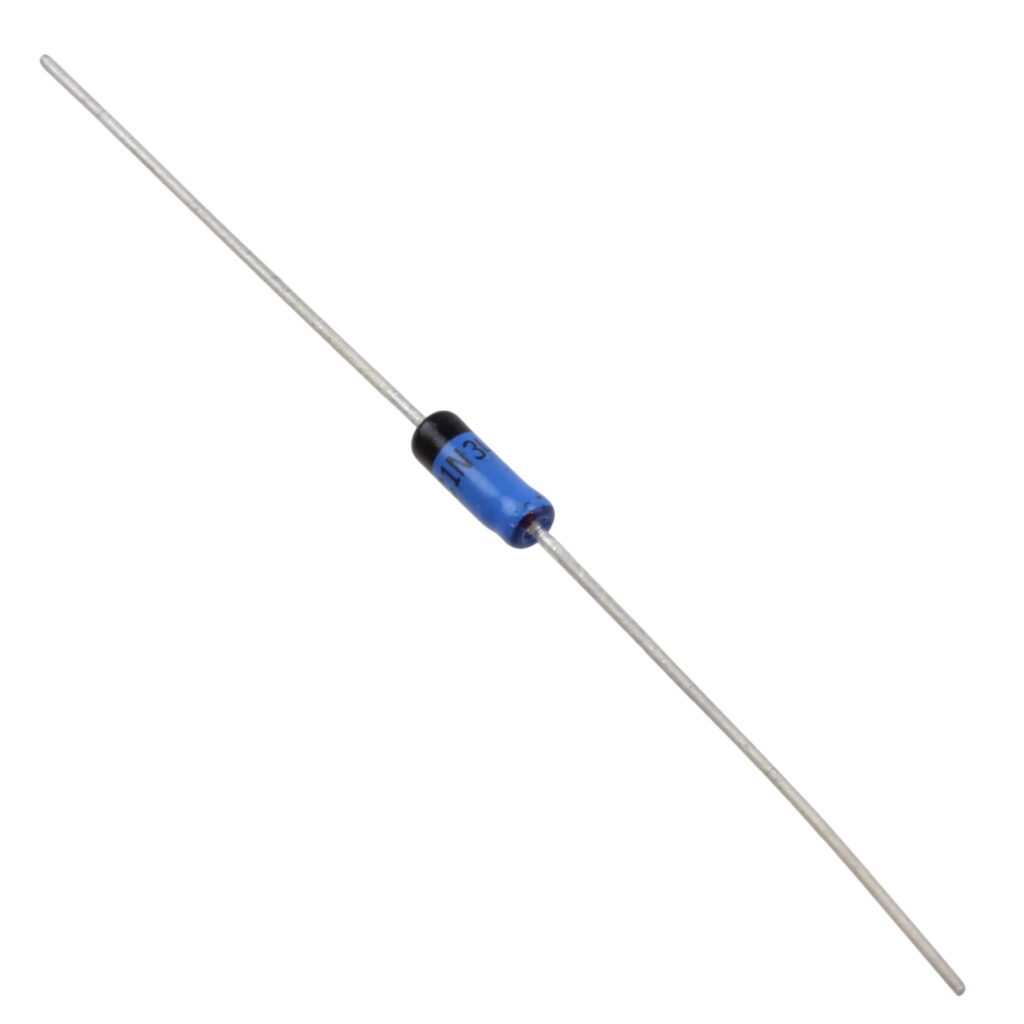
The Diotec Semiconductor 1N5821 is a Schottky Barrier Rectifier Diode designed for general-purpose rectification. It features an average forward current rating of 3 A and a maximum repetitive peak reverse voltage of 30 V. The device utilizes a DO-201AD axial leaded package, ensuring compatibility with through-hole mounting configurations. Electrical characteristics include a maximum forward voltage of 0.90 V at 9.4 A and a typical junction capacitance of 80 pF at 4 V reverse bias. Thermal resistance values are specified as 25 K/W from junction to ambient and 8 K/W from junction to lead.
Verify the specific manufacturer datasheet before integration, as electrical parameters such as leakage current and thermal resistance may vary between production batches or suppliers. Confirm that the DO-201AD package dimensions match your PCB footprint requirements. Ensure the component grade aligns with standard commercial/industrial reliability expectations rather than automotive or life-support specifications.
Select this component when a 3 A continuous current rating and 30 V blocking voltage are required in a through-hole package. Consider the 0.90 V forward voltage drop for efficiency calculations in low-voltage applications. Evaluate the 80 pF junction capacitance if high-frequency switching performance is critical for the target circuit design.
This part belongs to the 1N582x series of Schottky Barrier Rectifiers, which includes variants with different voltage ratings such as the 1N5820 (20 V) and 1N5822 (40 V). All members share identical current ratings and physical packaging but differ in their maximum repetitive peak reverse voltage specifications. This series is widely used in standard commercial electronics requiring reliable rectification.
Cross-reference with other manufacturers offering the 1N5821 designation, such as Vishay or Taiwan Semiconductor, ensuring DO-201AD compatibility. Verify that substitute parts maintain the same 3 A current and 30 V voltage ratings. Check for equivalent thermal resistance and forward voltage characteristics to ensure circuit performance remains unchanged.
 1N5821
The activity of extra discounts on wholesale prices is in full swing…
Please fill in your contact information and we will send you the latest wholesale price list.