 ChipApex | Global Electronic Components Supplier
SEARCH
Search Product
Search Post
— IC芯片 | 连接器 | 传感器 | 被动器件 —
Search productSearch post
— IC芯片 | 连接器 | 传感器 | 被动器件 —
Consult the customer manager about the wholesale price.
consultation hotline:86-132-6715-2157
email:[email protected]
Contact the product manager for consultation. One-stop consultation is available.
Do you want a lower wholesale price? Please send us your inquiry and we will reply immediately.
The Microchip Technology 1N6077US/TR is a surface-mount ultrafast recovery rectifier diode rated for 100 V working peak reverse voltage and 6.0 A average rectified forward current at an ambient temperature of 70°C. It features a maximum reverse recovery time of 30 ns and a peak forward surge current capability of 75 A. The device utilizes a voidless hermetically sealed glass package with tungsten slugs, offering low thermal resistance of 8.5°C/W. Electrical characteristics include a maximum forward voltage of 1.76 V at 18.8 A and a maximum reverse leakage current of 5.0 µA at the rated voltage.
Verify component authenticity through authorized Microchip distributors or official channels. Confirm that the specific ordering suffix matches the required tape and reel packaging configuration. Ensure compliance with RoHS status requirements as indicated in the product documentation. Validate that the supplier provides valid traceability records for this high-reliability semiconductor component.
Select this component when a surface-mount ultrafast recovery rectifier is required for 100 V circuits. The 6 A current rating and 30 ns recovery time make it suitable for high-frequency switching environments. Consider the hermetic glass package for harsh environmental conditions where standard plastic packages may be insufficient. Verify thermal management requirements align with the specified junction temperature range.
This device belongs to the 1N6073US through 1N6081US series of ultrafast recovery rectifiers. The series offers various current ratings from 3 A to 12 A and reverse voltages from 50 V to 150 V. All devices in this family share similar voidless hermetically sealed glass construction and ultrafast recovery characteristics designed for high-reliability applications.
Consult the manufacturer's datasheet for direct pin-compatible alternatives within the same series. Verify electrical parameters such as reverse voltage, forward current, and recovery time match application requirements before substitution.
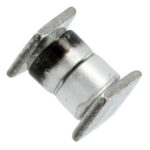 1N6077US/TR
The activity of extra discounts on wholesale prices is in full swing…
Please fill in your contact information and we will send you the latest wholesale price list.





