ChipApex | Global Electronic Components Supplier
SEARCH
Search Product
Search Post
— IC芯片 | 连接器 | 传感器 | 被动器件 —
Search productSearch post
— IC芯片 | 连接器 | 传感器 | 被动器件 —
Consult the customer manager about the wholesale price.
consultation hotline:86-132-6715-2157
email:[email protected]
Contact the product manager for consultation. One-stop consultation is available.
Do you want a lower wholesale price? Please send us your inquiry and we will reply immediately.
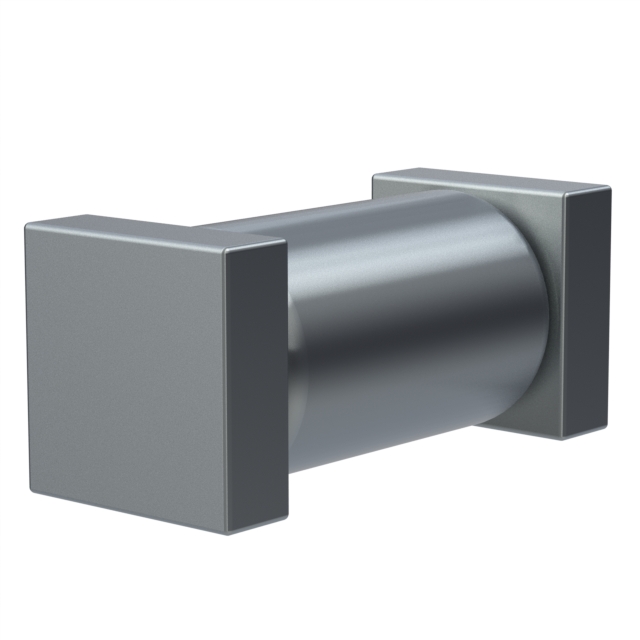
The Microchip Technology 1N6641US is a small-signal switching diode housed in a hermetically sealed D-5D glass package. It features a peak repetitive reverse voltage of 75 V and a maximum average forward current of 300 mA. The device exhibits a maximum forward voltage of 1.10 V at 200 mA pulsed, with a reverse leakage current of 100 nA at +25°C and 100 µA at +150°C. Key dynamic parameters include a reverse recovery time of 5.0 ns and a junction capacitance of 3.0 pF. It operates within a temperature range of -65°C to +175°C.
Verify the specific revision level and lot traceability upon receipt. Confirm that the lead finish matches tin/lead specifications if required by the assembly process. Ensure storage conditions remain within the specified limits to maintain hermetic seal integrity. Cross-reference the manufacturer's latest datasheet for any updates to mechanical dimensions or electrical tolerances before finalizing procurement orders.
Select this component when high reliability and radiation hardness are required. The D-5D package offers superior thermal performance compared to standard plastic packages. Consider the coefficient of expansion match between the device and the mounting surface to prevent mechanical stress during thermal cycling. Verify that the 75 V reverse voltage rating aligns with the circuit's peak inverse voltage requirements.
This part belongs to the 1N6639US through 1N6641US series of switching diodes manufactured under MIL-PRF-19500/609 standards. The series includes variants with different reverse voltage ratings, such as the 1N6639US (100 V) and 1N6640US (75 V). These components are designed for critical applications requiring consistent performance across wide temperature ranges.
Direct substitutes include JAN1N6641US and JANTX1N6641US, which share identical electrical characteristics and package dimensions. Ensure that any replacement maintains the same hermetic sealing and metallurgical bonding specifications to preserve reliability in harsh environments.
The cathode end of the device is identified by a band.
The reverse leakage current increases significantly with temperature, reaching a maximum of 100 µA at +150°C compared to 100 nA at +25°C.
 1N6641US
The activity of extra discounts on wholesale prices is in full swing…
Please fill in your contact information and we will send you the latest wholesale price list.