 ChipApex | Global Electronic Components Supplier
SEARCH
Search Product
Search Post
— IC芯片 | 连接器 | 传感器 | 被动器件 —
Search productSearch post
— IC芯片 | 连接器 | 传感器 | 被动器件 —
Consult the customer manager about the wholesale price.
consultation hotline:86-132-6715-2157
email:[email protected]
Contact the product manager for consultation. One-stop consultation is available.
Do you want a lower wholesale price? Please send us your inquiry and we will reply immediately.
The Microchip Technology 1N6761UR-1 is a small-signal Schottky rectifier designed for high-efficiency switching applications. It features a 100 V repetitive reverse voltage rating and supports an average forward current of 1 A. The device utilizes silicon technology in a MELF package (DO-213AB) with round-end construction. Key electrical characteristics include a maximum forward voltage of 690 mV at 1 A and a peak forward surge current capability of 25 A. It operates within a junction temperature range of -65°C to +150°C, ensuring reliability in demanding environments.
Verify the specific qualification level (e.g., JAN, JANTX) required for your application, as suffixes indicate different reliability standards. Confirm that the MELF/DO-213AB package format aligns with your PCB footprint and automated assembly capabilities. Ensure thermal management strategies account for the specified operating temperature range during system integration.
Select this component when low forward voltage and high-speed recovery are critical compared to standard PN junction diodes. The 1A current rating suits moderate power applications where efficiency losses must be minimized. Consider the MELF package constraints regarding soldering profiles and handling procedures distinct from axial leaded equivalents.
This part belongs to the 1N6761 series of Schottky barrier rectifiers manufactured by Microchip Technology. The series includes variants with different voltage ratings and packaging options, such as through-hole DO-41 versions. The UR-1 designation specifically identifies the surface-mount MELF configuration with defined electrical parameters for industrial and commercial use.
The primary difference is the package style; the 1N6761UR-1 uses a surface-mount MELF (DO-213AB) package, while the 1N6761-1 uses a through-hole DO-41 axial leaded package. Both share similar electrical characteristics like 100V rating and 1A current capacity.
Yes, the device is rated for a maximum junction temperature of +150°C, allowing it to function reliably in elevated thermal environments common in automotive and industrial electronics.
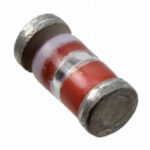 1N6761UR-1
The activity of extra discounts on wholesale prices is in full swing…
Please fill in your contact information and we will send you the latest wholesale price list.





