 ChipApex | Global Electronic Components Supplier
SEARCH
Search Product
Search Post
— IC芯片 | 连接器 | 传感器 | 被动器件 —
Search productSearch post
— IC芯片 | 连接器 | 传感器 | 被动器件 —
Consult the customer manager about the wholesale price.
consultation hotline:86-132-6715-2157
email:[email protected]
Contact the product manager for consultation. One-stop consultation is available.
Do you want a lower wholesale price? Please send us your inquiry and we will reply immediately.
The Texas Instruments SN74LVC2GU04-Q1 is an automotive-grade dual unbuffered inverter belonging to the LVC logic family. It operates within a supply voltage range of 1.65 V to 5.5 V and supports CMOS input/output levels with push-pull outputs. The device provides high drive capability with output currents of ±32 mA. It is housed in a compact SC-70-6 package and is qualified to AEC-Q100 standards, ensuring reliability for demanding environments. The component functions across an extended temperature range from -40°C to +125°C.
Verify the specific suffix 'QDRYRQ1' against official Texas Instruments documentation to confirm the exact tape-and-reel quantity and moisture sensitivity level. Ensure the ordering part number matches the required automotive grade and package variant. Cross-reference the datasheet revision date to validate technical specifications before finalizing procurement orders.
Select this component when a dual inverter is required for automotive applications with strict space constraints due to the SC-70-6 package. The LVC series offers a balance of speed and power consumption suitable for battery-operated systems. Confirm that the 1.65 V minimum supply voltage aligns with the target system's power rails and that the push-pull output type meets the interface requirements.
This device is part of the SN74LVC2GUxx-Q1 family of automotive logic ICs. It serves as a fundamental building block for digital signal processing within vehicle electronics. The Q1 suffix denotes automotive qualification, while the LVC prefix indicates Low-Voltage CMOS technology optimized for performance at reduced voltages compared to older logic families.
Direct substitutes include other automotive-qualified dual inverters such as the NXP 74LVC2GU04-Q100 or ON Semiconductor NLX2GU04 variants. Verify pin compatibility and electrical characteristics before substitution. Non-automotive grades like the standard SN74LVC2GU04 may lack the required thermal and reliability certifications for automotive deployment.
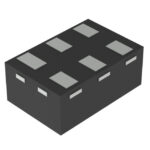 1P2GU04QDRYRQ1
The activity of extra discounts on wholesale prices is in full swing…
Please fill in your contact information and we will send you the latest wholesale price list.





