 ChipApex | Global Electronic Components Supplier

SEARCH
Search Product
Search Post
Search productSearch post
Consult the customer manager about the wholesale price.
consultation hotline:86-132-6715-2157
email:[email protected]
Contact the product manager for consultation. One-stop consultation is available.
Do you want a lower wholesale price? Please send us your inquiry and we will reply immediately.
20CJQ030 is listed in the Diode Arrays range at ChipApex. The manufacturer field lists Vishay General Semiconductor - Diodes Division. Its product description is DIODE ARRAY SCHOT 30V 1A SOT-223. Review the specifications below when checking this part for your BOM.
The Vishay 20CJQ030 is a surface-mount Schottky rectifier featuring a dual common cathode configuration in an SOT-223 package. It provides a maximum average forward current of 1 A per leg (2 A total) and a repetitive peak reverse voltage of 30 V. The device exhibits a low forward voltage drop, specified at 0.50 V at 1 A and 25 °C, with a typical junction capacitance of 120 pF. Operating temperatures range from -55 °C to +150 °C, supported by a thermal resistance of 65 °C/W junction-to-ambient.
Verify the specific ordering suffix to confirm lead-free status, as standard production variants differ from PbF versions. Confirm the SOT-223 package style matches the required footprint. Ensure the 30 V rating aligns with the circuit's peak reverse voltage requirements. Check technical documentation for thermal derating curves relevant to the specific mounting conditions.
Select this component when a compact surface-mount solution is required for low-voltage, moderate-current rectification. The dual common cathode arrangement allows for efficient bridge or center-tapped configurations within a single package. Consider the 30 V breakdown limit and the 1 A per-leg current capacity against the application's peak load demands.
This device belongs to Vishay's Schottky "Q" series, designed specifically for industrial-level qualification. It utilizes silicon technology to achieve high-frequency performance while maintaining a small physical footprint. The SOT-223 case style facilitates automated assembly processes commonly used in modern electronics manufacturing.
Ensure any substitute maintains the SOT-223 package dimensions and pinout compatibility. Verify that the replacement offers equal or superior reverse voltage ratings and forward current capabilities. Confirm thermal characteristics match the original design constraints to prevent overheating.
The maximum non-repetitive surge current is 400 A for a 5 µs sine pulse or 3 µs rectangular pulse.
The device features a common cathode configuration with two independent anodes sharing a single cathode connection.
The typical junction capacitance per leg is 120 pF, measured at 5 VDC reverse bias.
Explore related parts through Rectifiers, Diodes, Discrete Semiconductor Products, all product categories.
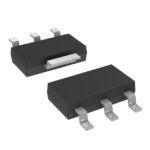 20CJQ030

The activity of extra discounts on wholesale prices is in full swing…
Please fill in your contact information and we will send you the latest wholesale price list.





