 ChipApex | Global Electronic Components Supplier
SEARCH
Search Product
Search Post
— IC芯片 | 连接器 | 传感器 | 被动器件 —
Search productSearch post
— IC芯片 | 连接器 | 传感器 | 被动器件 —
Consult the customer manager about the wholesale price.
consultation hotline:86-132-6715-2157
email:[email protected]
Contact the product manager for consultation. One-stop consultation is available.
Do you want a lower wholesale price? Please send us your inquiry and we will reply immediately.
The Renesas Electronics 2305NZT-1DCG8 is a high-speed clock buffer designed for demanding clock distribution applications. It accepts one reference input and drives five low-skew clock outputs. The device operates within a supply voltage range of 2.3 V to 2.7 V, with a maximum propagation delay of 8.7 ns. It is housed in an 8-pin SOIC package (code DCG8) and supports surface-mount installation. The component functions as a non-zero delay buffer, suitable for environments requiring stable signal transmission without the phase-locking loop characteristics found in zero-delay variants.
Verify the specific suffix '8' against official Renesas documentation to confirm packaging format, as standard listings often denote tube packaging while suffixes may indicate reel or cut tape options. Confirm RoHS compliance status directly from the manufacturer's current datasheet, as regulatory statuses can change over time. Ensure the operating temperature range matches the design requirements, as industrial grades typically differ from commercial versions.
Select this component when a fixed non-zero delay buffer is required rather than a PLL-based zero-delay solution. The 2.5V nominal supply requirement distinguishes it from the 3.3V 2305 series. Verify that the 8.7 ns propagation delay meets the timing constraints of the target circuit. Ensure the 8-pin SOIC footprint aligns with the PCB layout specifications.
The 2305NZT-1DCG8 belongs to the 2305NZT family of clock buffers. This family is distinct from the standard 2305 zero-delay buffer series, which utilizes Phase Locked Loop (PLL) technology. The NZT designation indicates a non-zero delay architecture, providing direct buffering of the input clock signal to multiple outputs without the feedback loop integration found in other variants like the 2305-1DCG8.
Publicly confirmed substitute part numbers are not available in the provided source material. Cross-referencing requires consulting official Renesas replacement guides or distributor compatibility matrices.
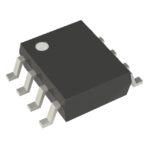 2305NZT-1DCG8
The activity of extra discounts on wholesale prices is in full swing…
Please fill in your contact information and we will send you the latest wholesale price list.





